MAY 23-25 AT THE UNIVERSITY OF BRITISH COLUMBIA
EXPERIENCE KŌDŌ
The Way of Japanese Incense

Symposium & Public Incense Ceremonies
Presented by The Dōjin Japanese Art Society in partnership with UBC Department of Asian Studies, Nitobe Memorial Garden, & UBC Library
For three days, spanning May 23rd to May 25th, 2025, EXPERIENCE KŌDŌ offered the Vancouver community the opportunity to learn about the history and arts of kōdō, the Japanese “Way of Fragrance,” and to take part in a three-part participatory experience of the art form in practice.
On Friday, May 23rd, an academic symposium featuring lectures by three guest speakers from Japan was held at the UBC Irving K. Barber Learning Centre in conjunction with UBC Library. (See SYMPOSIUM section below.)
Through the support of the Senzan Goryū school of Kōdō based in Kyoto, Japan, the local audience was offered samplings of rare aromatic woods presented in the traditional manner in the tranquil setting of the Nitobe Memorial Garden and Asian Centre on UBC’s Point Grey campus. (See PUBLIC INCENSE CEREMONIES section below.)
In conjunction with this special event, an additional educational exhibit explaining the art of Kōdō and the materials and utensils used in this centuries-old artistic practice was installed for the months of May through August at the UBC Asian Centre through a special partnership with the UBC Asian Library. (See EXHIBIT section below.)
We are pleased to be able to offer recordings of the lectures and documentation of the other programs in conjunction here for those who were unable to attend in person.


“If you can suspend any preconceptions about incense to fully experience the ceremony of koh, the happy result will be the ability to appreciate ‘incense’ time as you would ‘tea time’ for relaxation, refreshment, and communion with others.”
— From The Book of Incense by Kiyoko Morita
FRIDAY, MAY 23
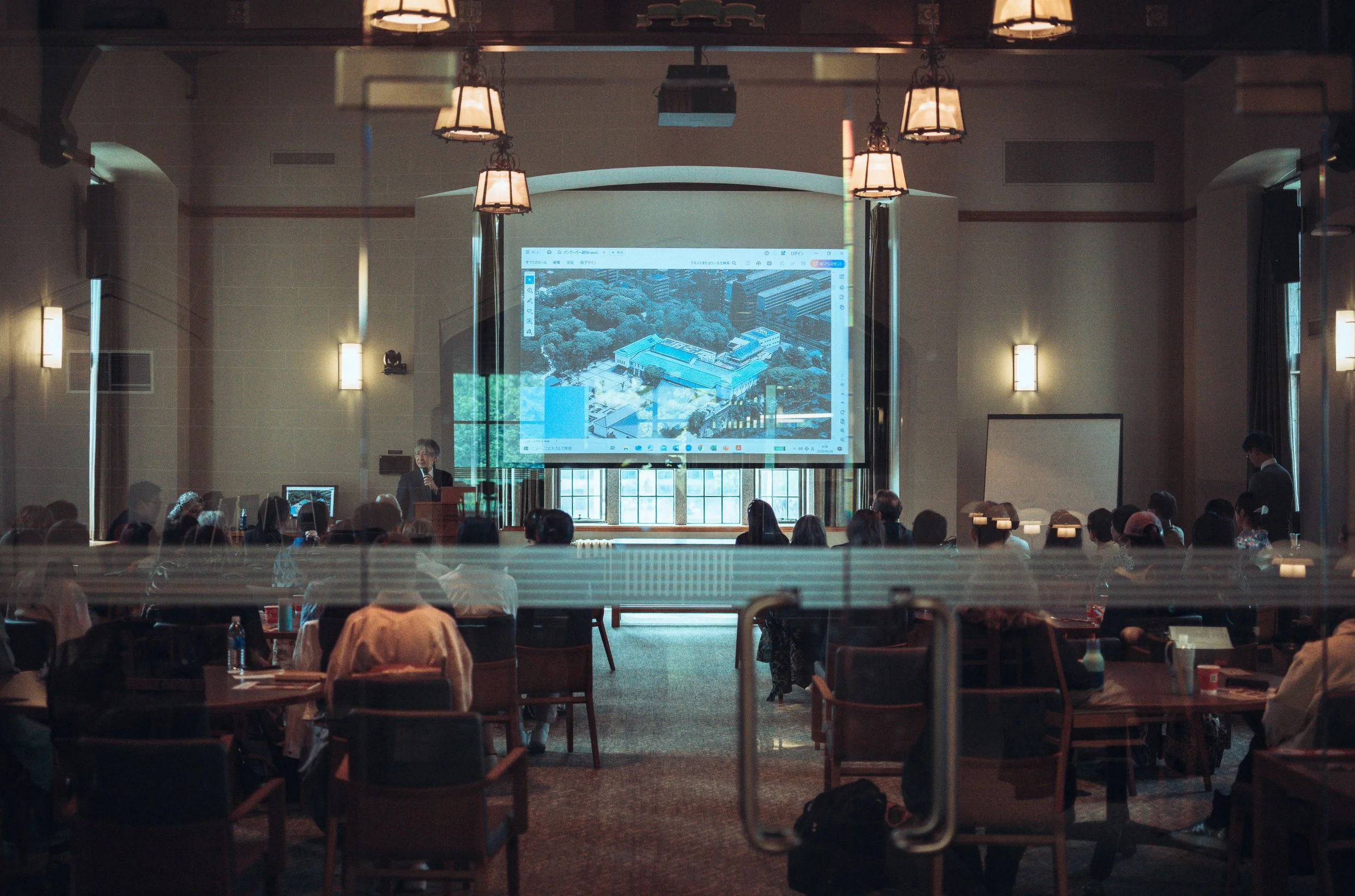
-
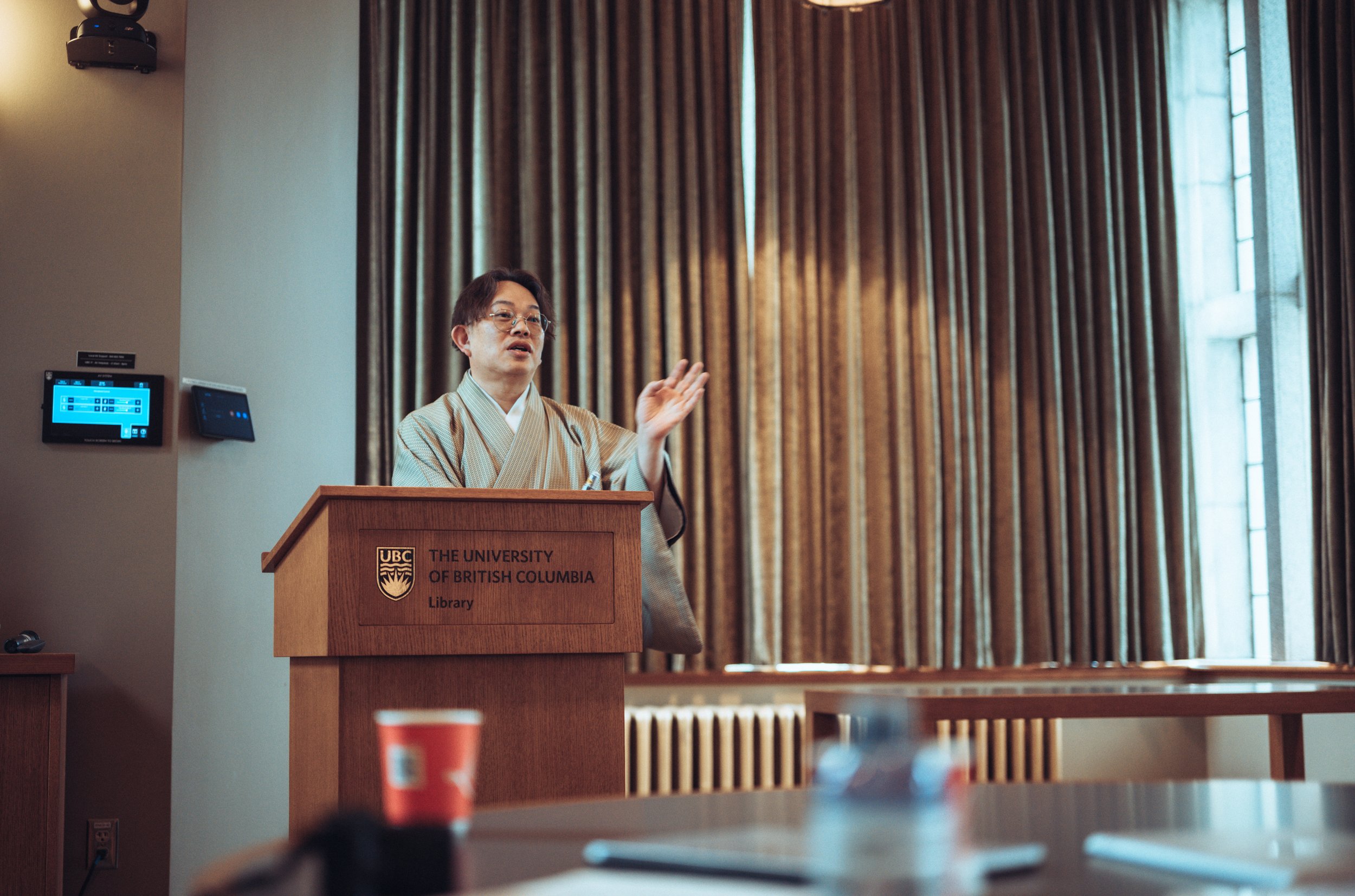
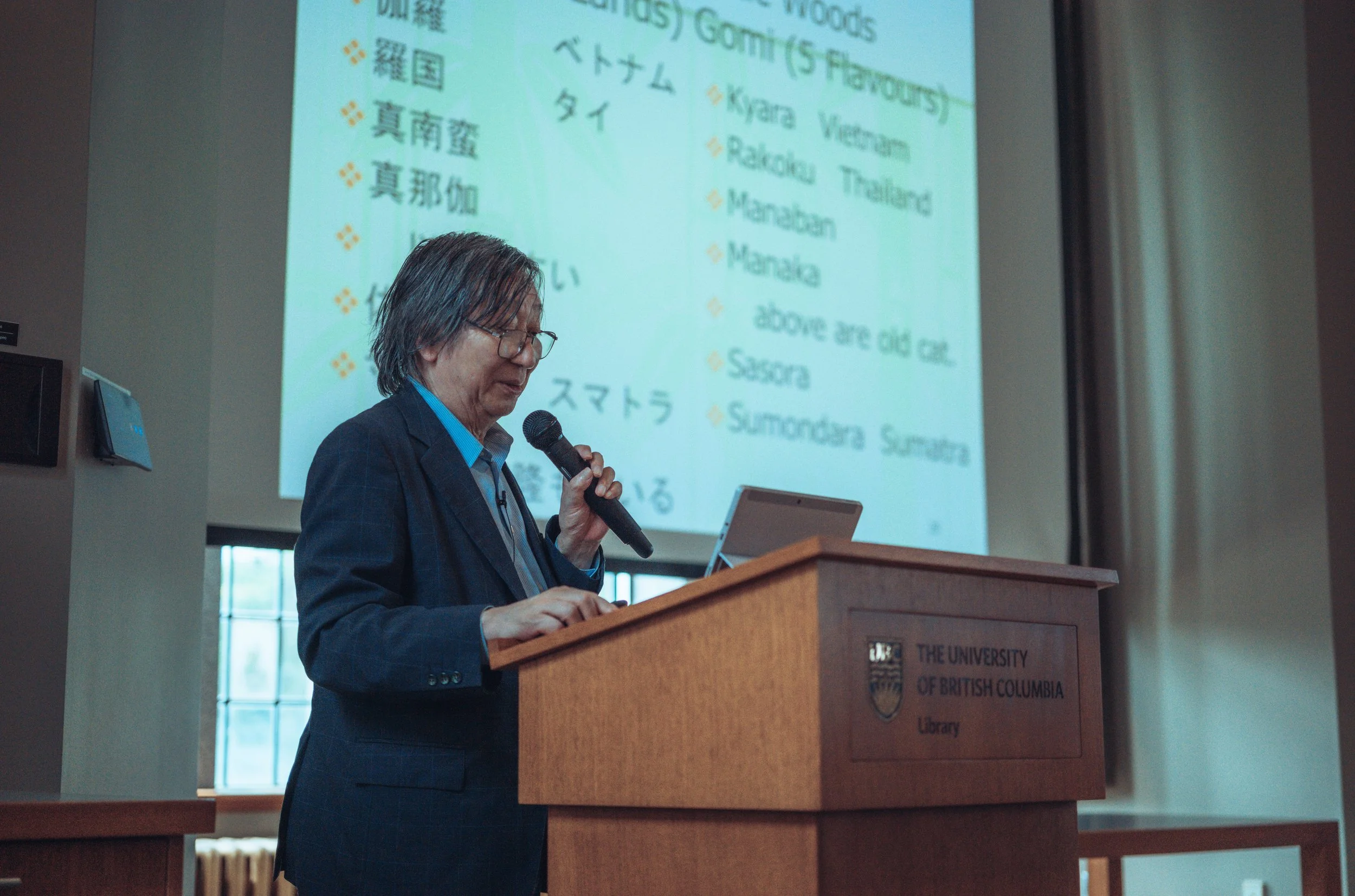
Master NISHIGIWA offered a lively, interactive presentation explaining the main principles of Kumikō, the exercise of “listening” to different scents and distinguishing among different categories of naturally aromatic woods.
-
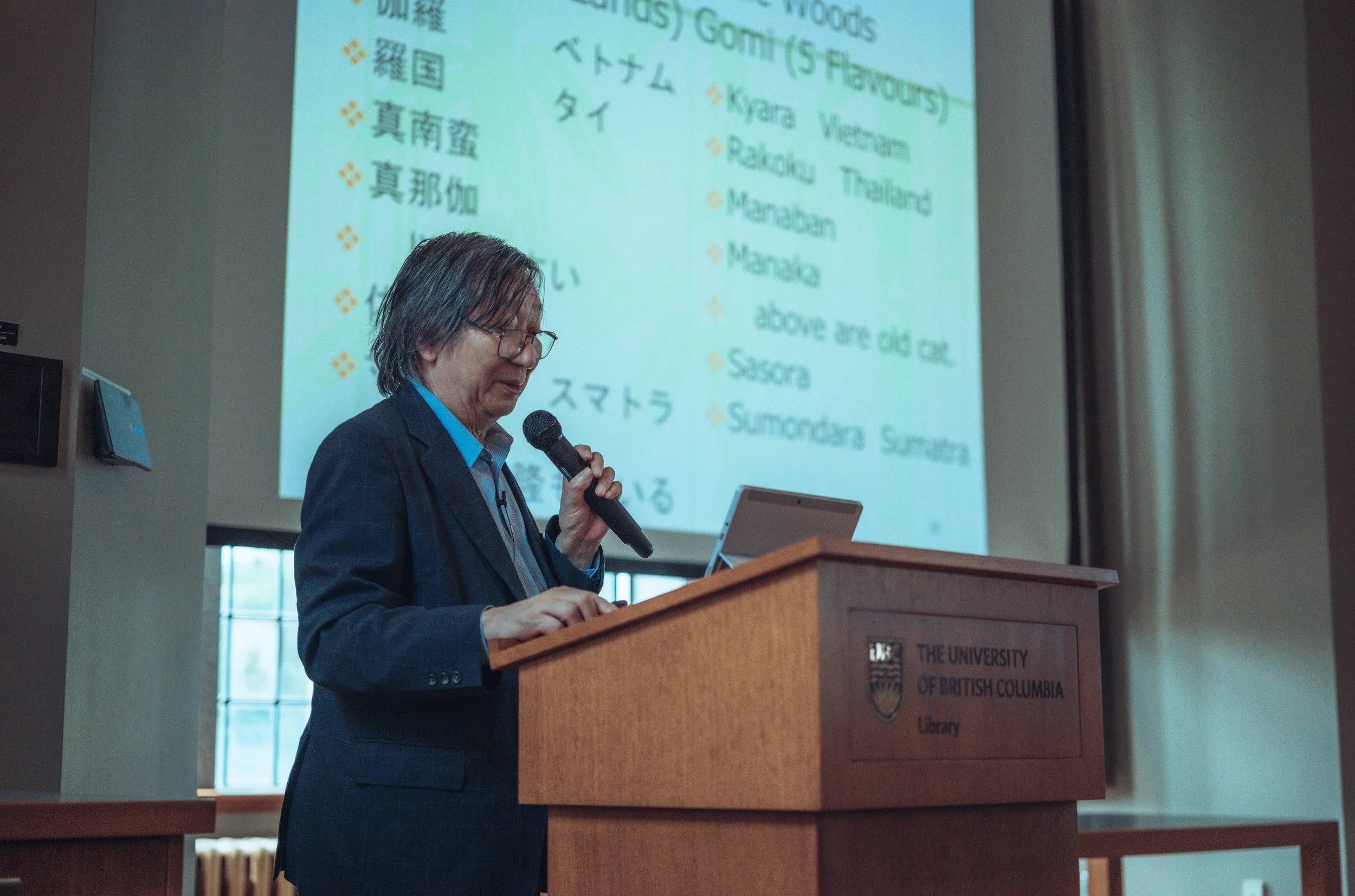
Yano Sensei’s lecture provided an overview of the history of the appreciation of aromatics in Japan, from pieces of aromatic woods preserved in imperial collections from as early as the 6th century, through the sophisticated practice of blending incense at the imperial court in the 9th and 10th centuries, through the use of precious aromatic woods as political capital in the early Warring States period.
-
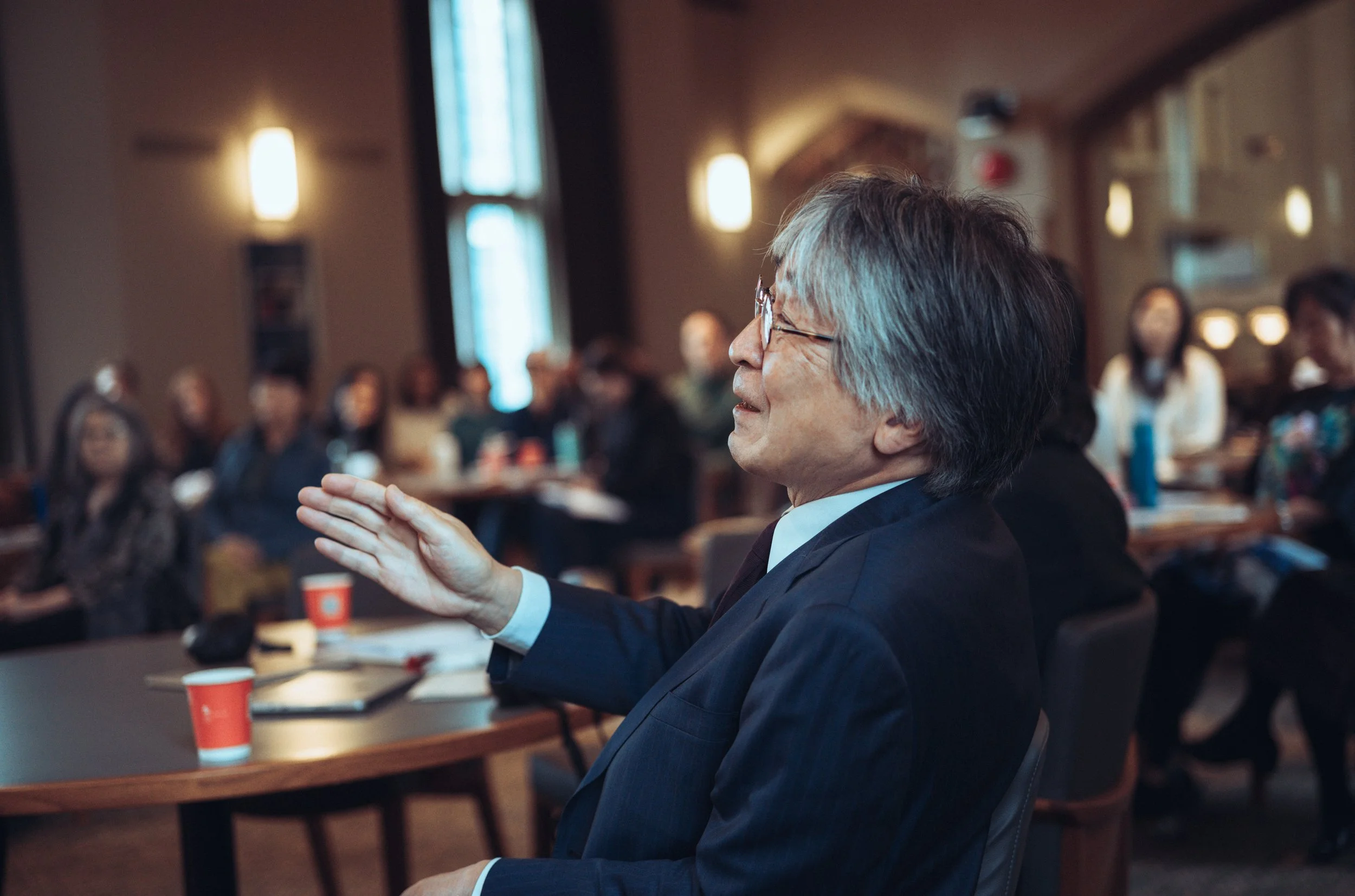
Yotsutsuji Sensei provided an overview of the Tokugawa Art Museum collections, with a focus on the numerous objects related to incense culture. The presentation offered a tantalizing taste of the spectacular holdings, which range from substantial quantities of famous aromatic woods that had been collected personally by Tokugawa Ieyasu, the first shogun of the Edo period, to gorgeous lacquerware utensils and furnishings that were used by shogunal princesses and members of the shogunal household.
SYMPOSIUM
Kōdō: The Art & Culture of the Japanese Way of Incense
The weekend began with welcoming special guests from Japan who shared their deep knowledge and expertise in the centuries-old cultural practice of Kōdō and its associated history and material culture. An overflowing audience filled the Peña Room at the I.K. Barber Learning Centre for this lecture series offering a rare opportunity to engage with the historical, aesthetic, and cultural contexts of Japanese incense. The program was moderated by Dr. Joshua Mostow from the UBC Department of Asian Studies and English-language interpretation was provided by Maiko Behr.
We are pleased to be able to offer recordings of the three formal presentations from this symposium for online viewing. Please click on the links to the left to view the relevant recording.
Keynote Lecture “Kōdō in Contemporary Practice”:
by NISHIGIWA Jhōyo, Headmaster Designate, Senzan Goryū School of Kōdō, Kyoto
Additional Lectures:
The History of Kōdō in Japan: From the Asuka period to Oda Nobunaga by YANO Tamaki, Professor Emeritus, Saitama University and Dōshisha University, Kyoto
Incense Wood and Incense Utensils Inherited by the Owari Tokugawa Family by YOTSUTSUJI Hideki, Special Curatorial Advisor, The Tokugawa Art Museum, Nagoya, and Special Professor, Nagoya University of Economics
Viewing of Special Collections
Ahead of the symposium, attendees were treated to a special viewing of recent acquisitions of Edo-period poem cards, calligraphic works, and narrative illustrations from the UBC Library Rare Books and Special Collections next door to the symposium venue in the stately I. K. Barber Learning Centre’s Dodson Room.
Click on images below to be taken to the video recordings page.
SATURDAY, MAY 24 & SUNDAY, MAY 25
PUBLIC INCENSE CEREMONIES
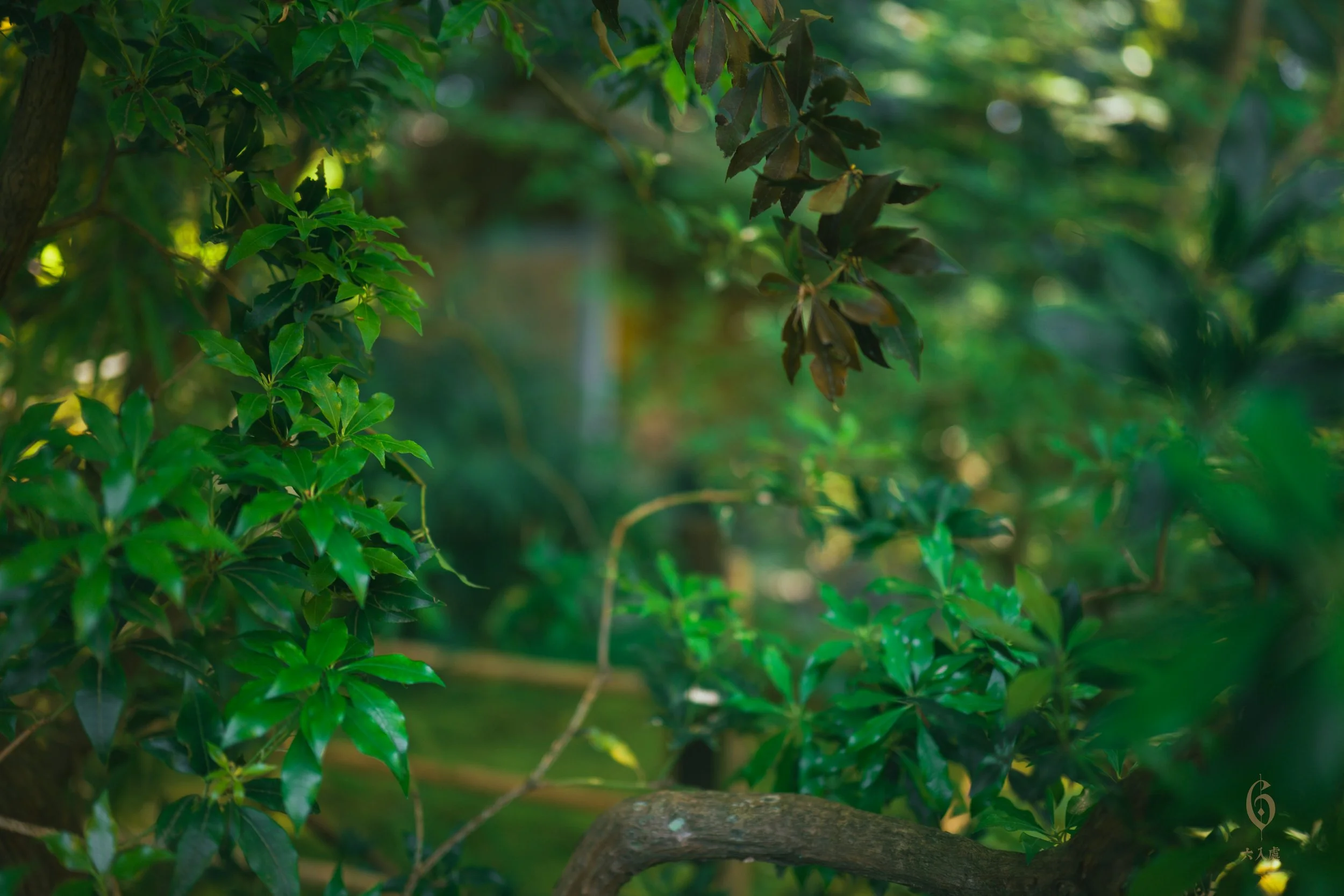
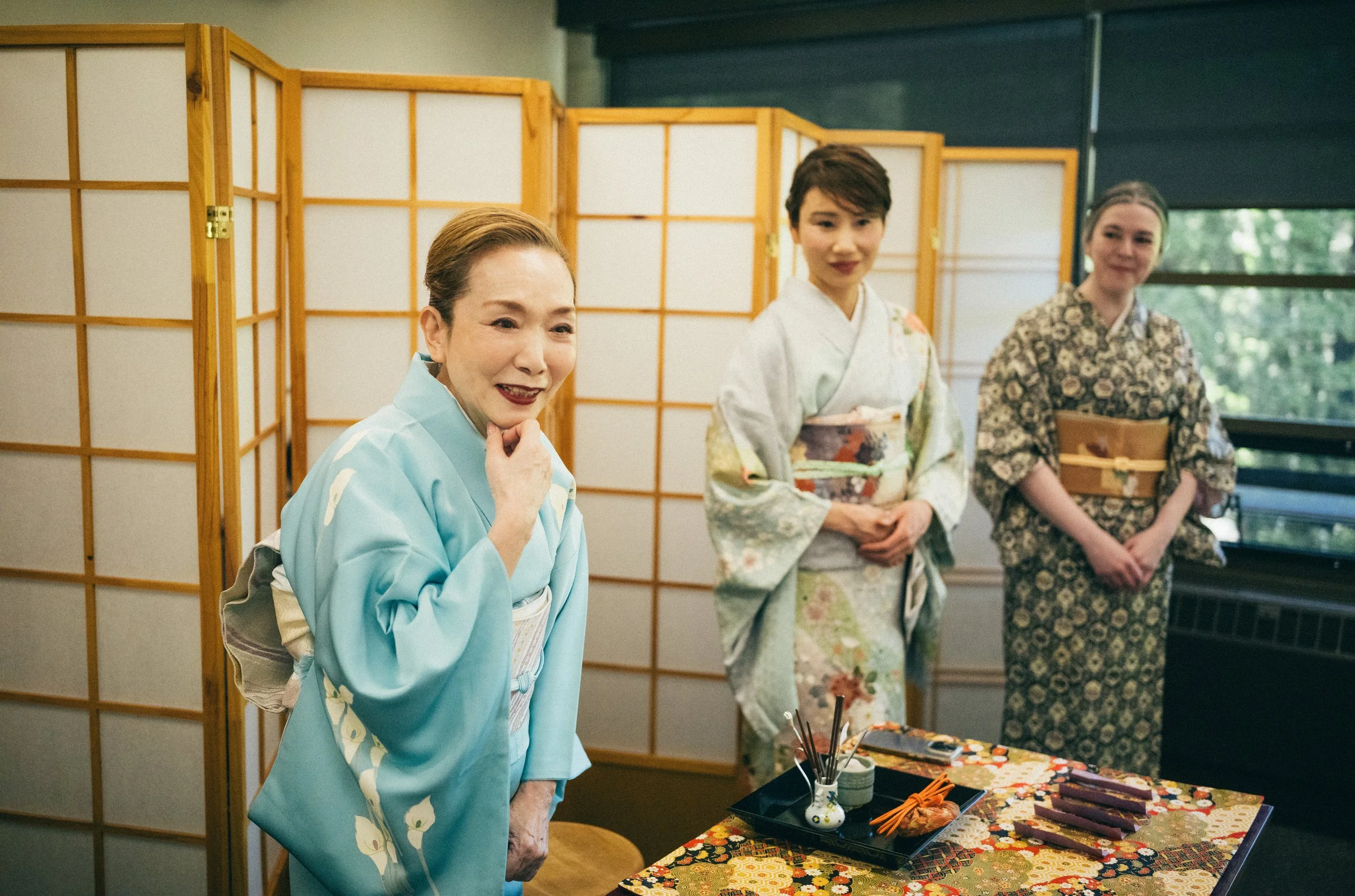
On the weekend, guests enjoyed the opportunity for an immersive experience of Japanese incense traditions set at the beautiful Nitobe Memorial Garden and UBC Asian Centre with a program including:
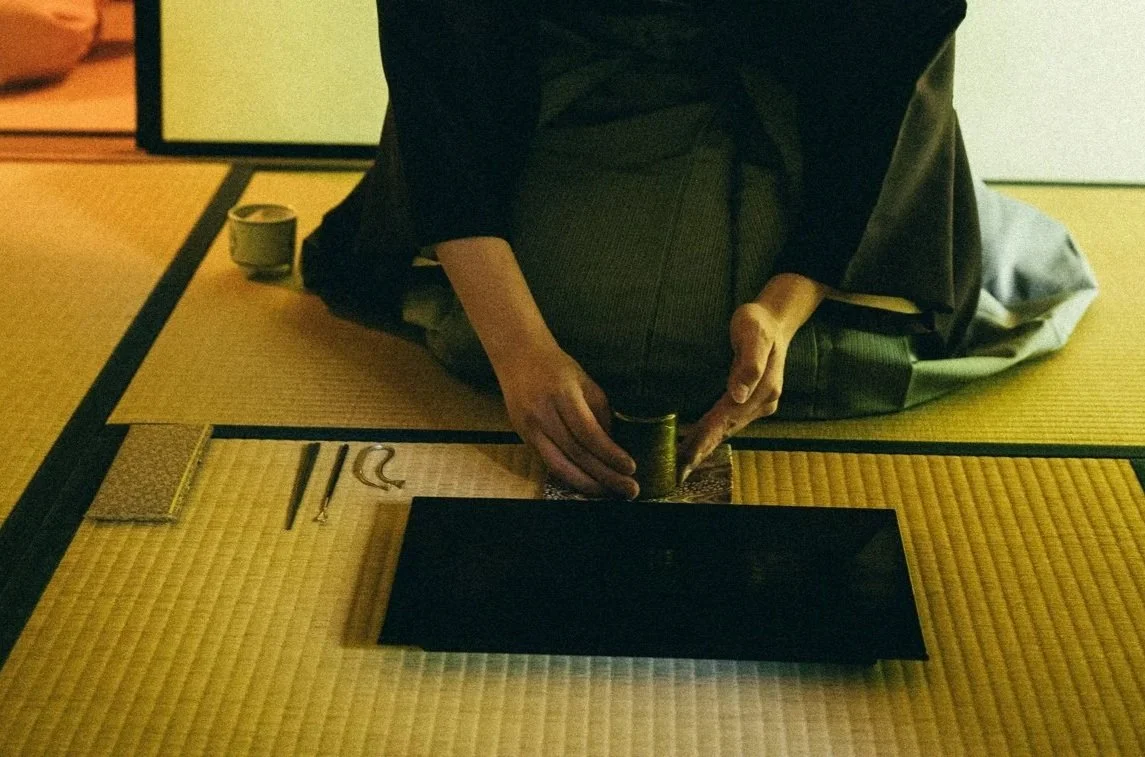
incense sessions set in the traditional tearoom in Nitobe Memorial Garden featuring a single special named incense (meikōgiki 名香聞).
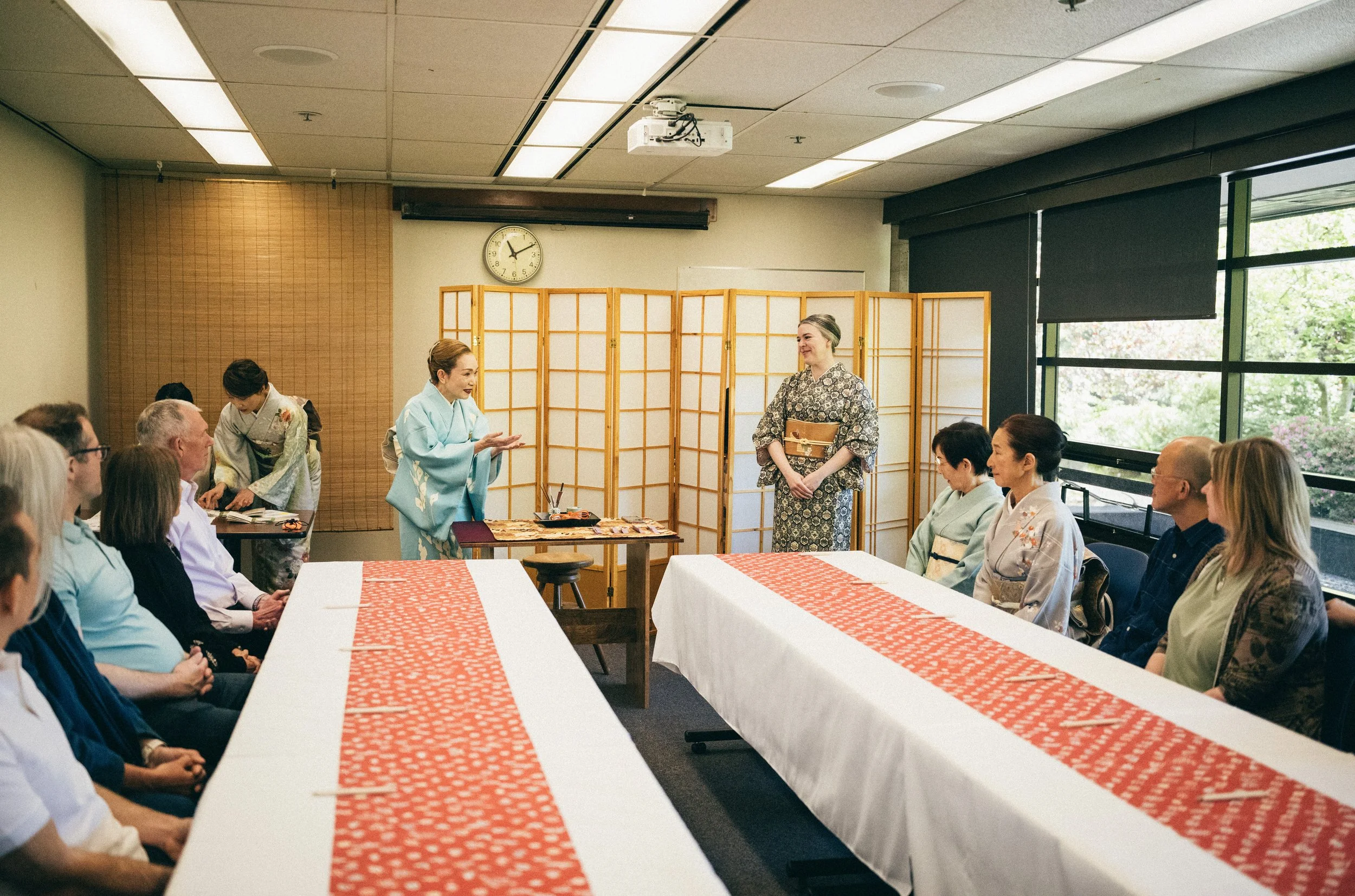
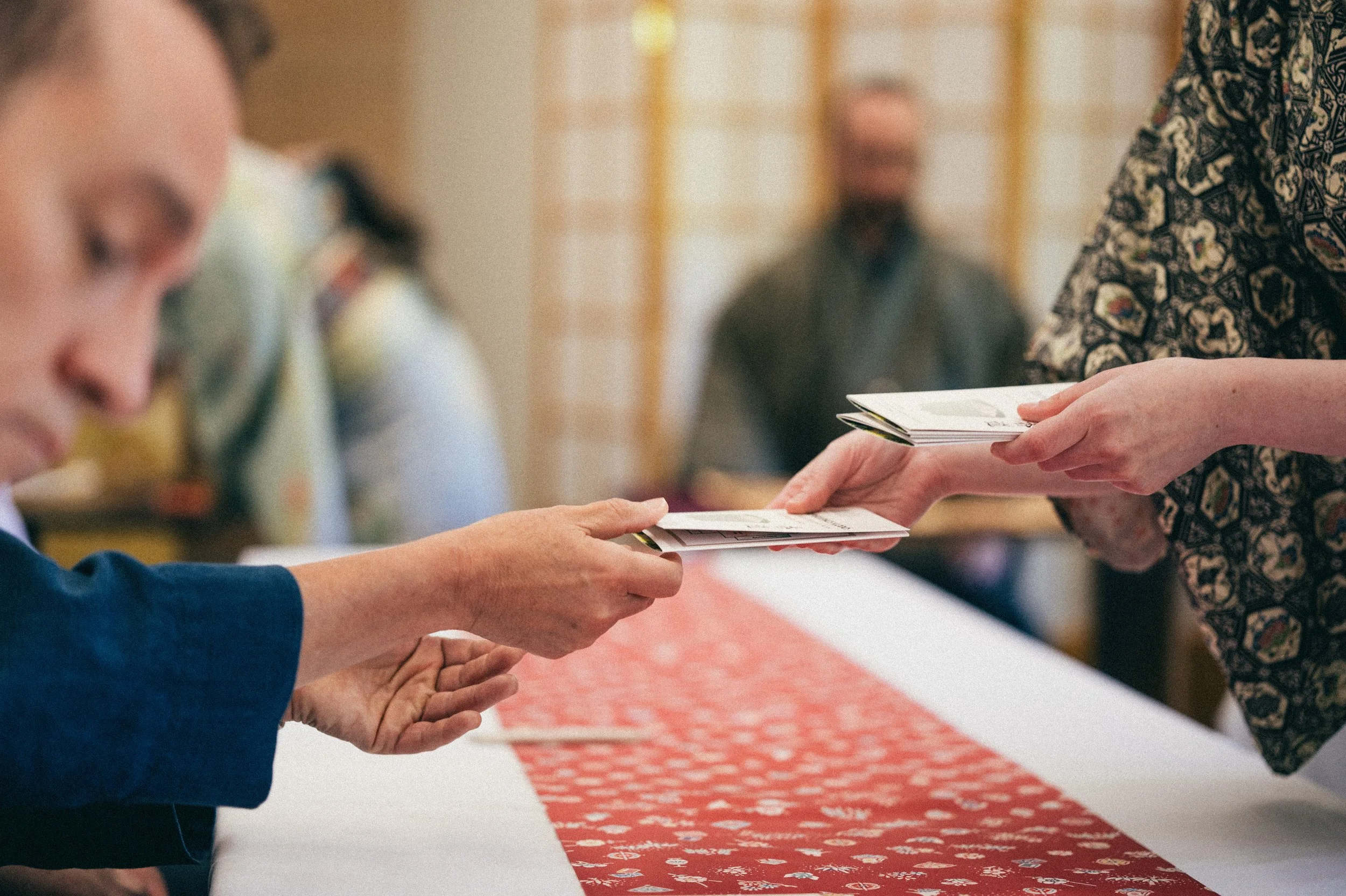
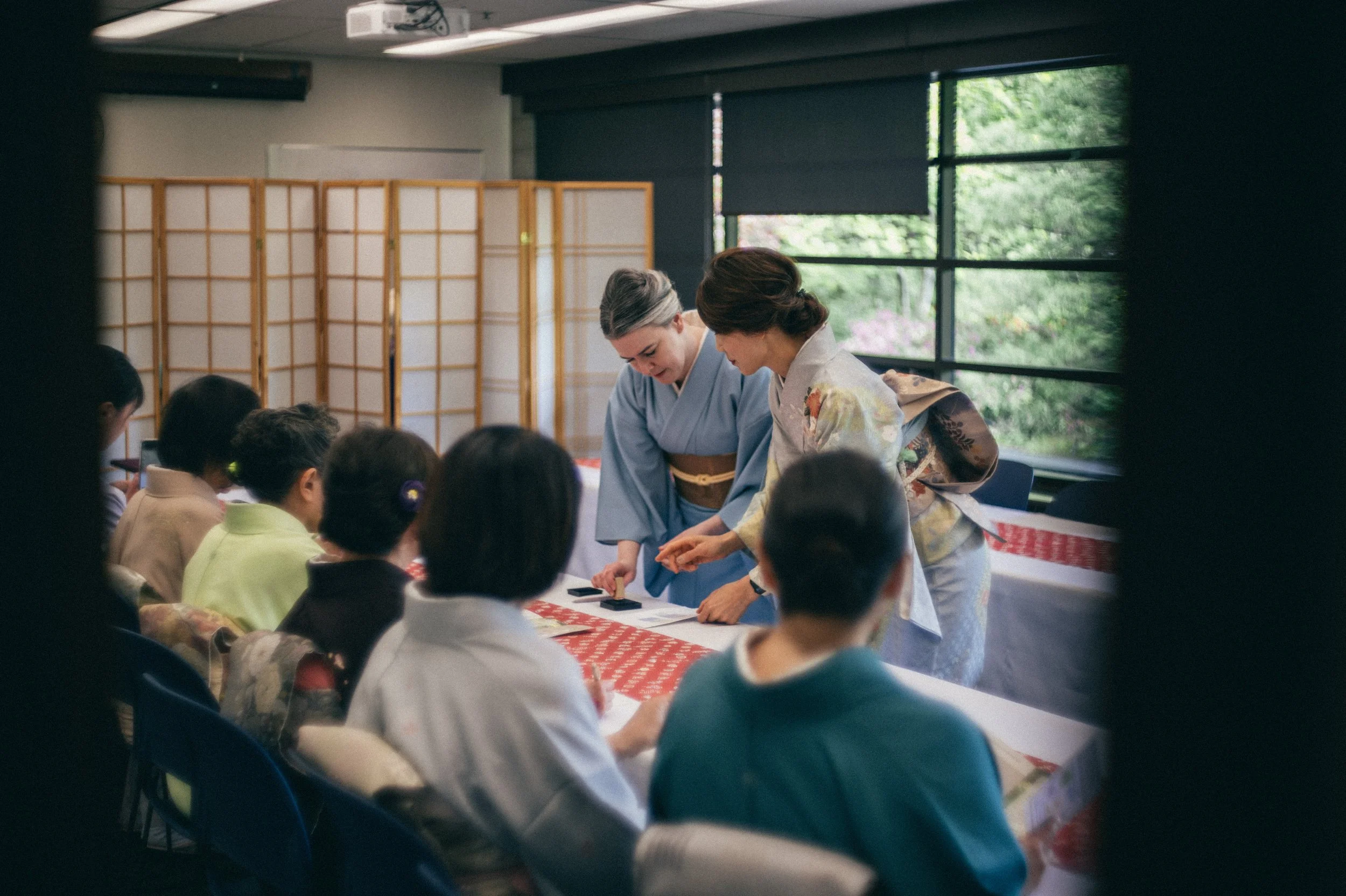
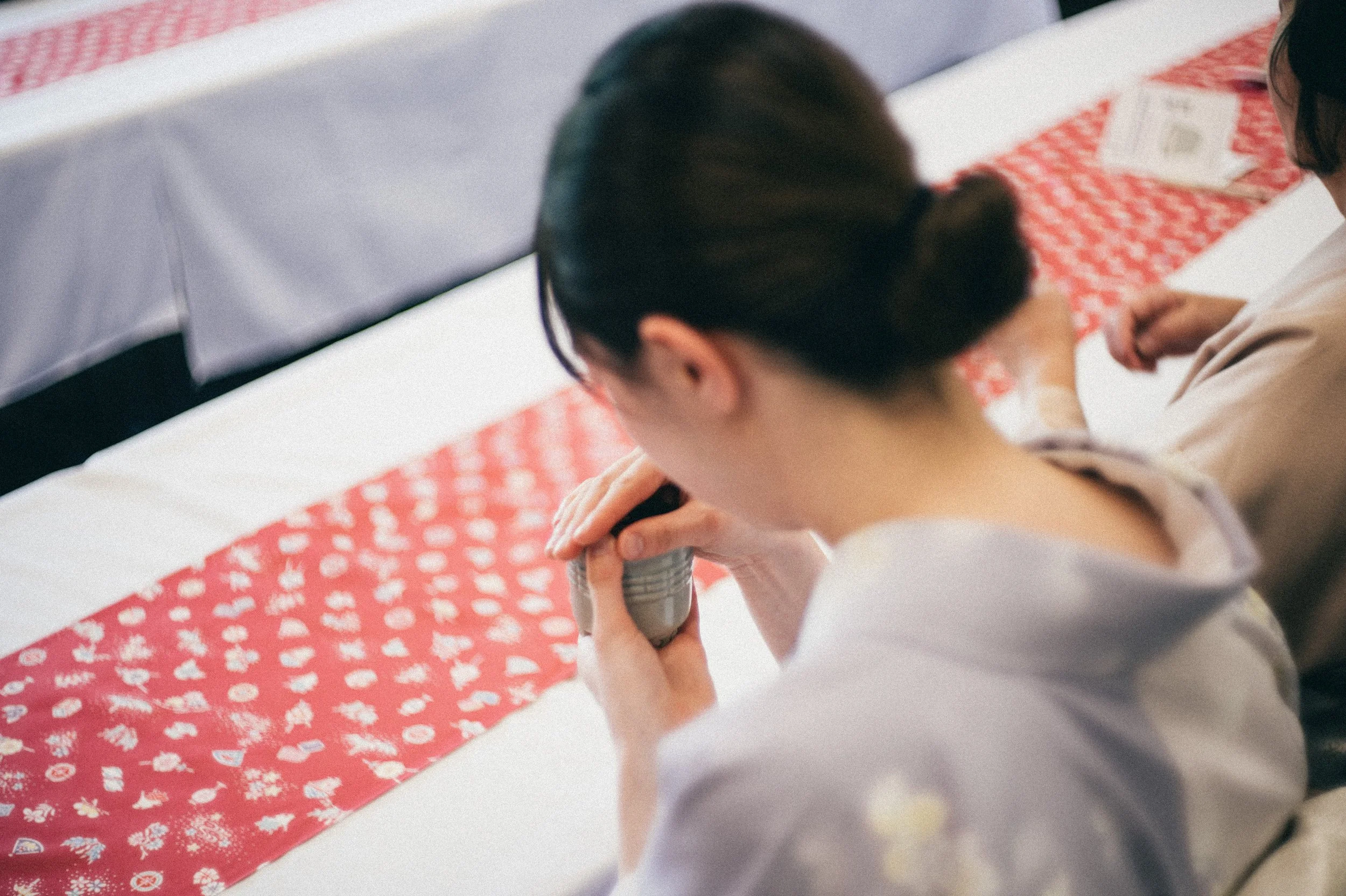
incense sessions held in the ryūrei 立礼 style (seated at long tables) in the Asian Centre consisting of an exercise in discerning among several different woods in a seasonally themed scent-matching game (kumikō 組香)
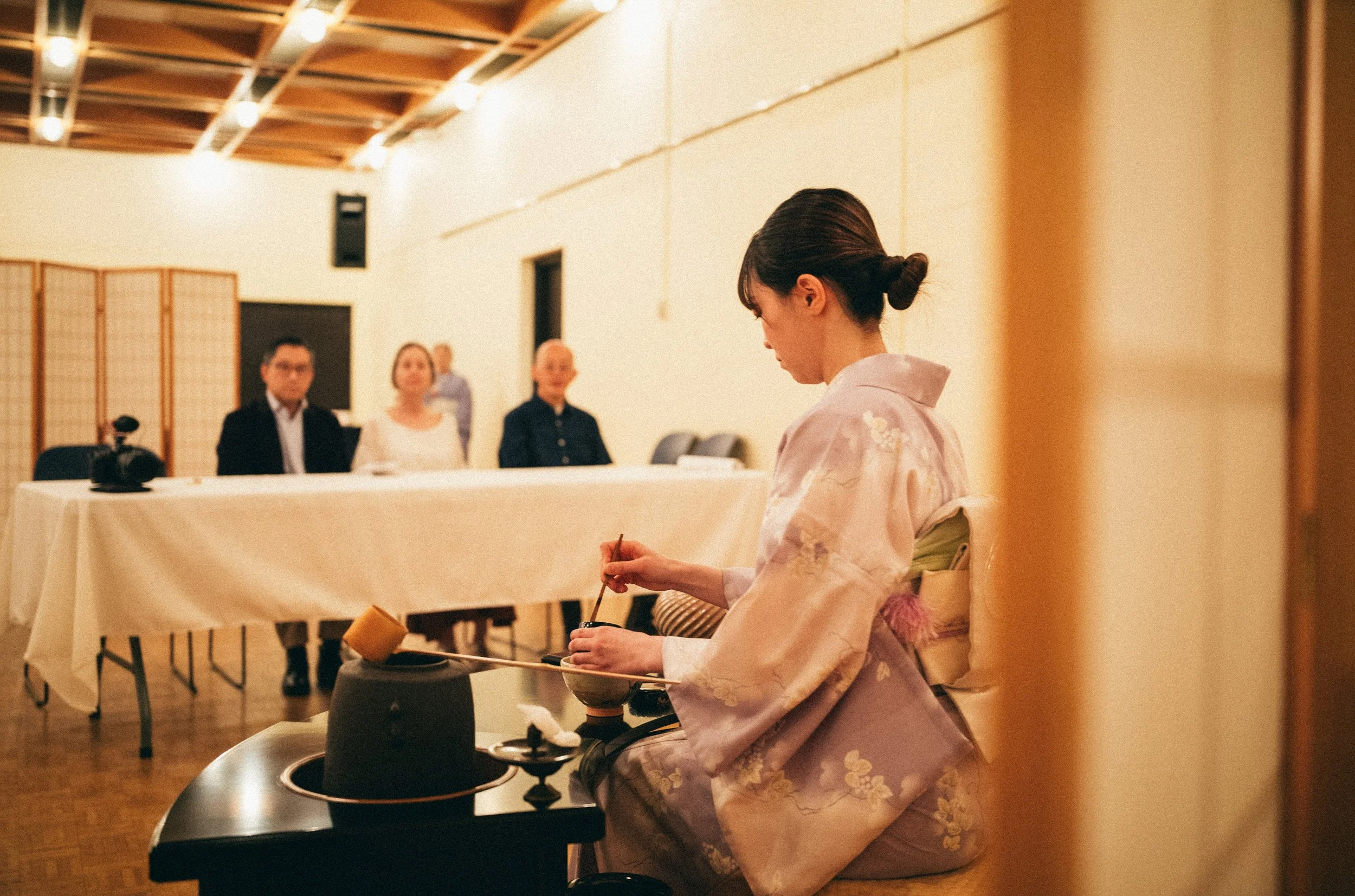
and matcha tea service in the Asian Centre auditorium
Meikō Sessions 名香席
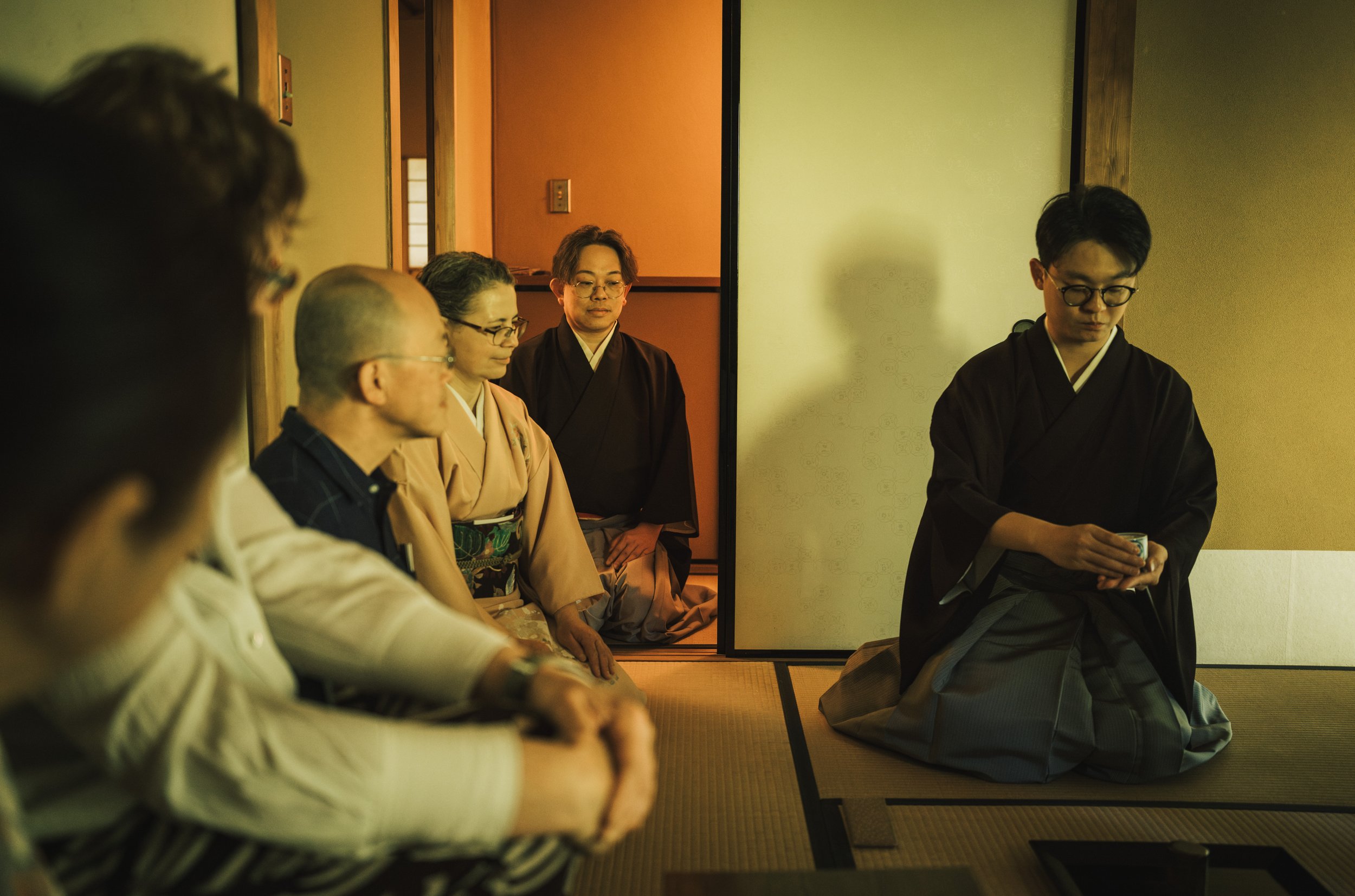
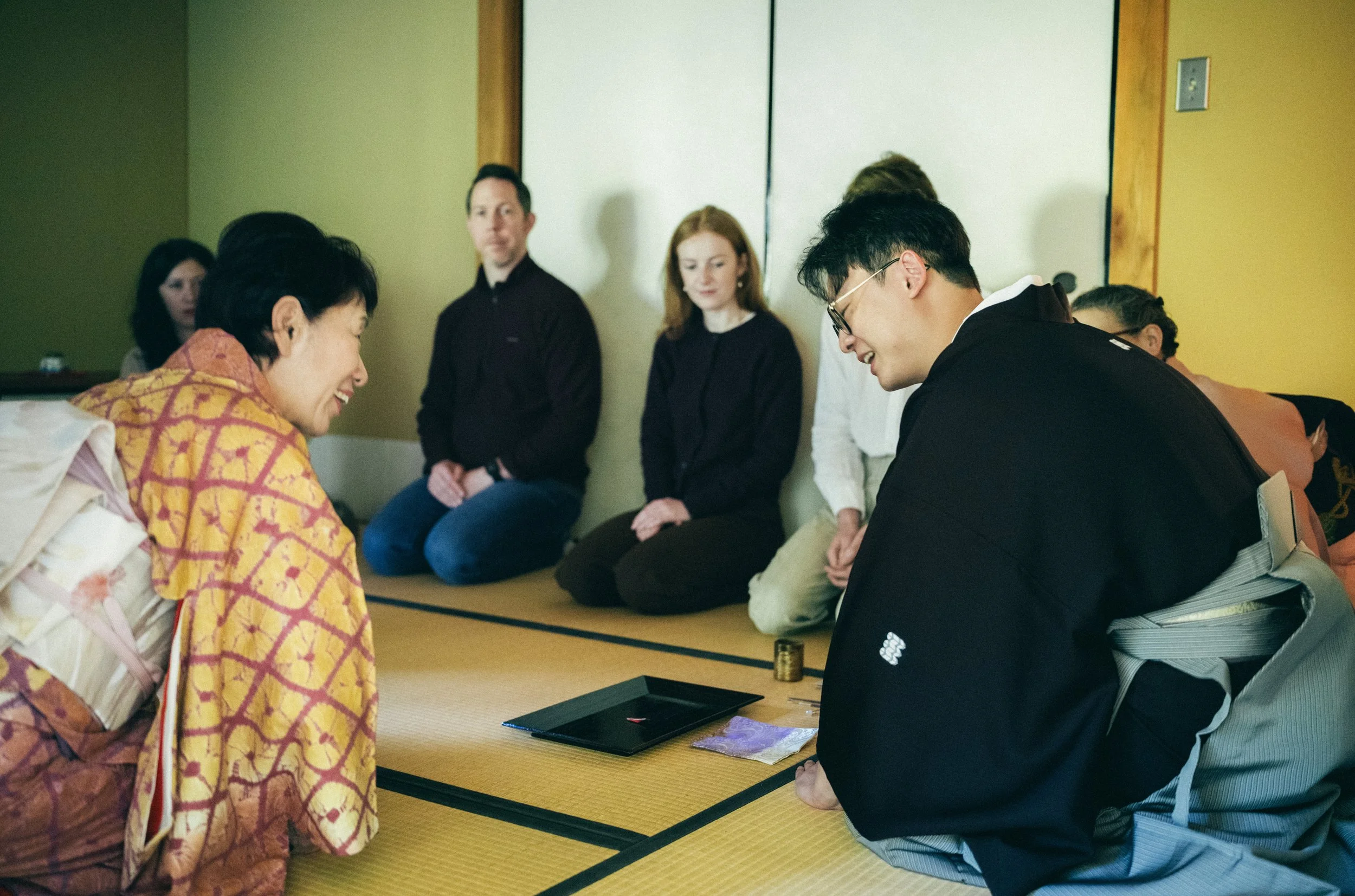
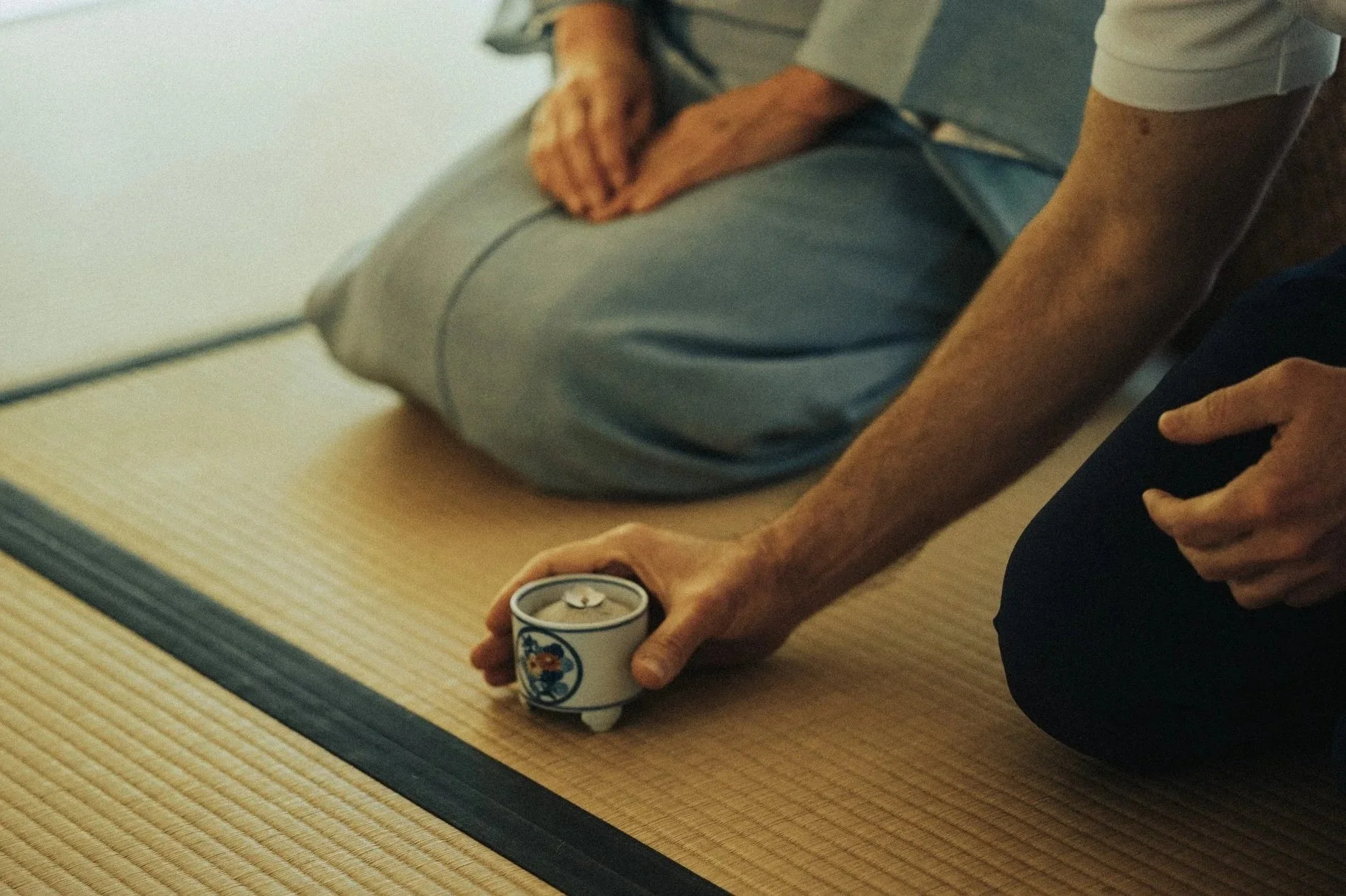
The feature event of the program offered the opportunity to sample a single special sample of a centuries-old aromatic wood of the Kyara type with the name Kongō 金剛 (vajra or diamond). In the contemplative setting of the Ichibōan tea house in Nitobe Garden, guests passed the burner around the circle, connecting, one by one, with generations past.
Once all had had a chance to appreciate the scent Master Nishigiwa spoke about the name (ご香銘), the origin (木所), and the history (ご由緒) of the piece.
Even for regular practitioners of Kōdō incense ceremony, it is rare to have the chance to sample such a special aromatic wood. We are deeply grateful to Master Nishigiwa and Kōdō Senzan Goryū for making this rare opportunity possible not only for local practitioners, but also for the wider Vancouver-area community.
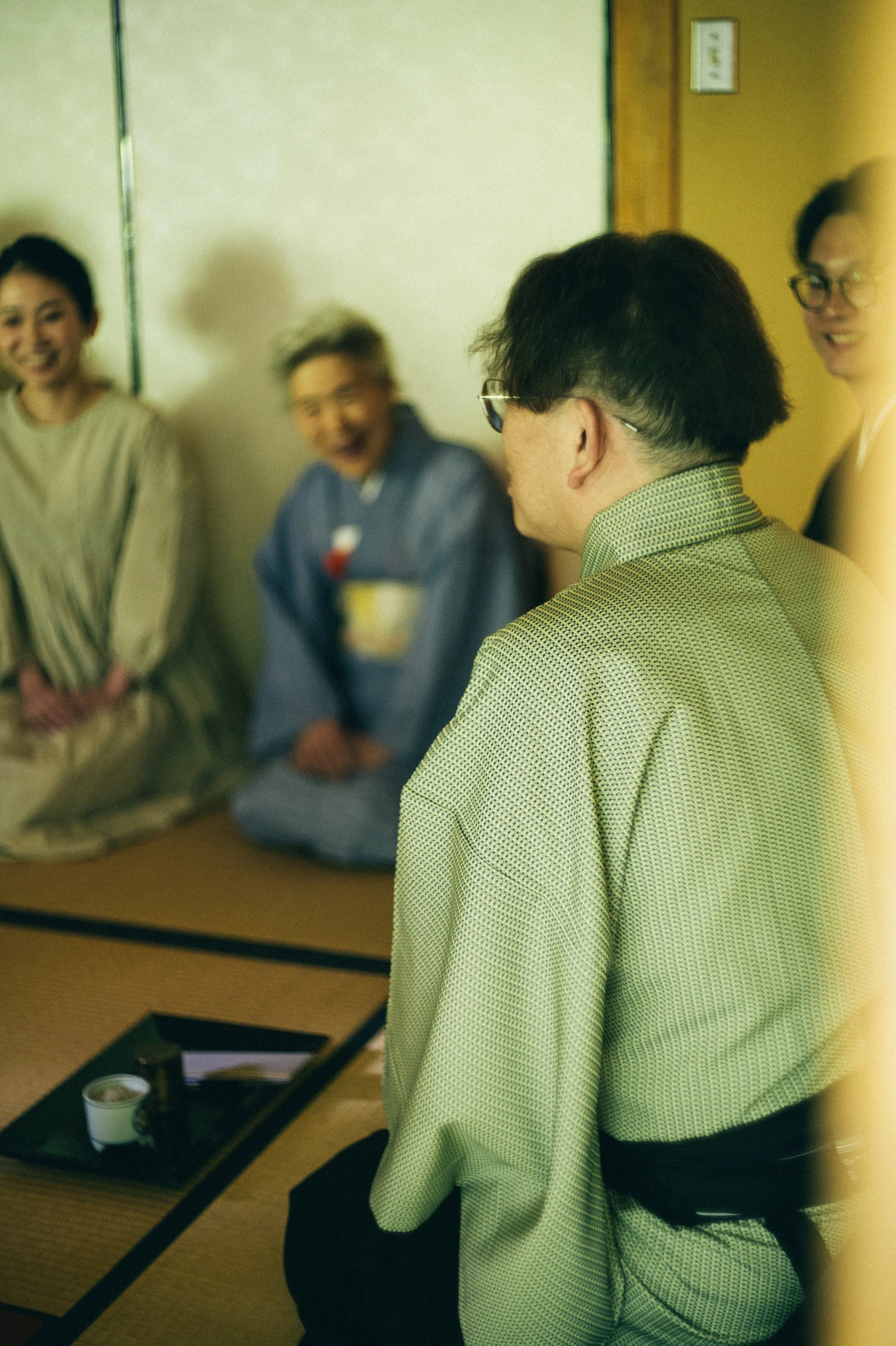
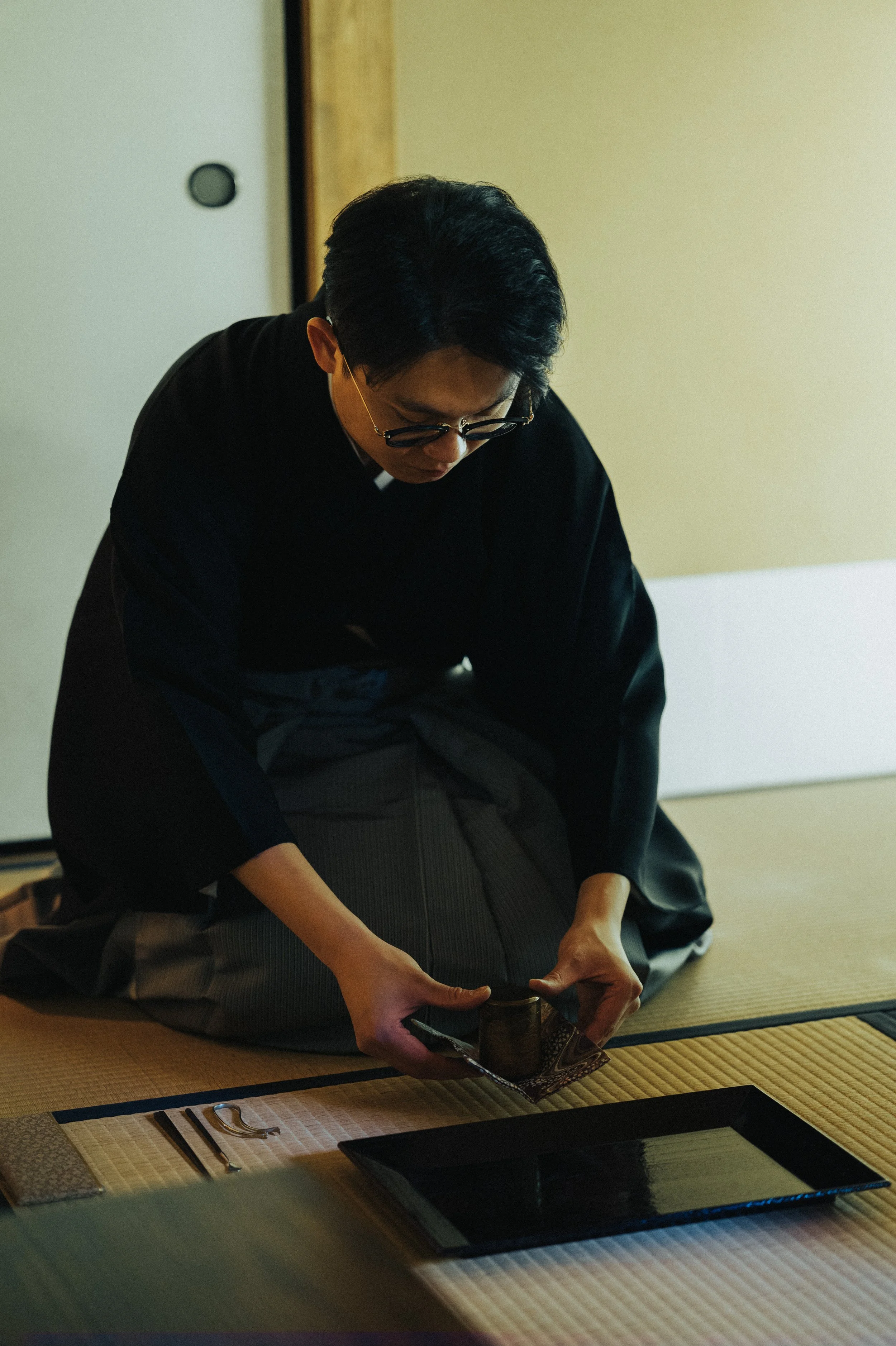
Photos by Xun Yu, 6 Sensorial Lab
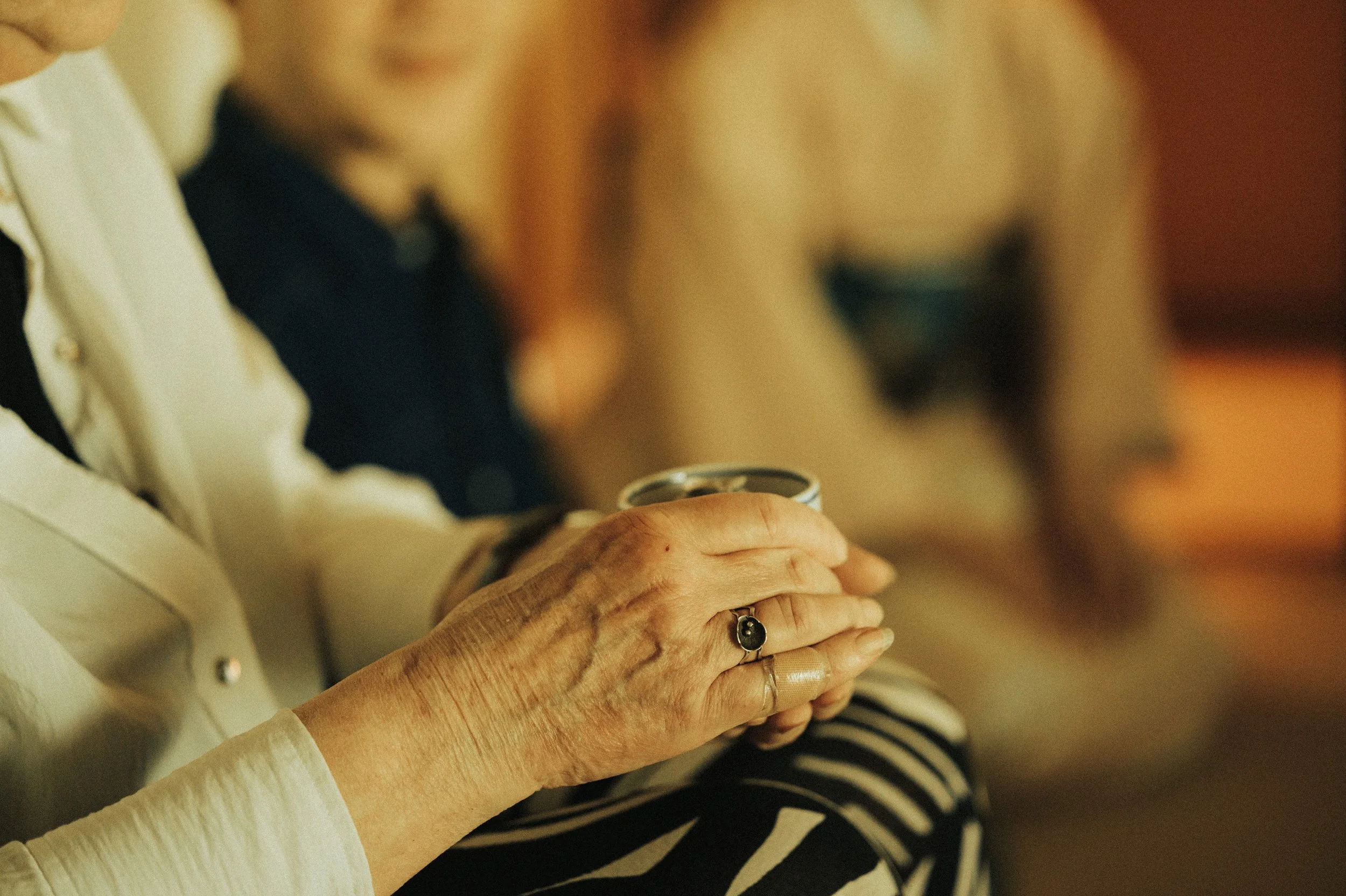
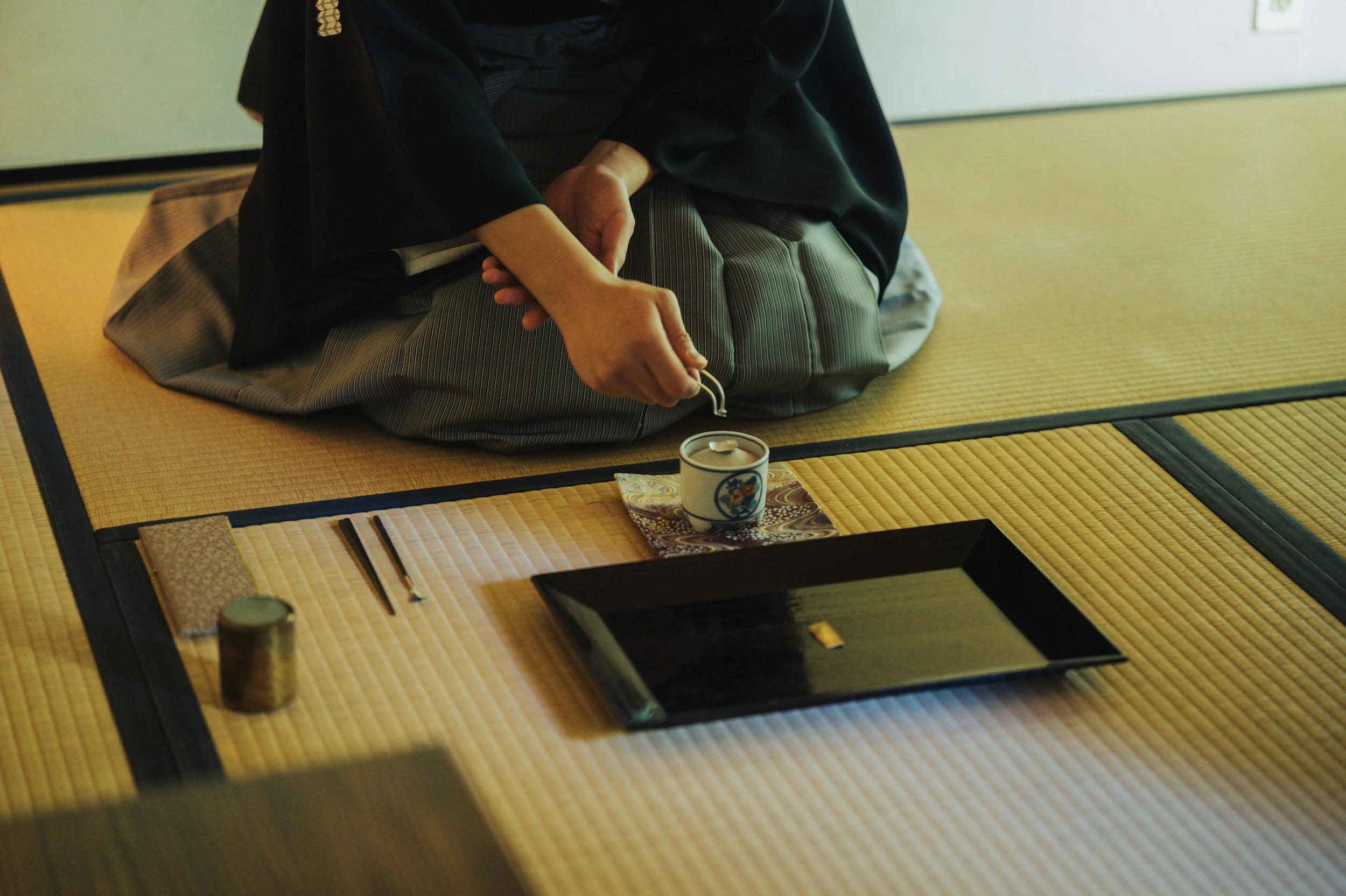
Kumikō Sessions 組香席
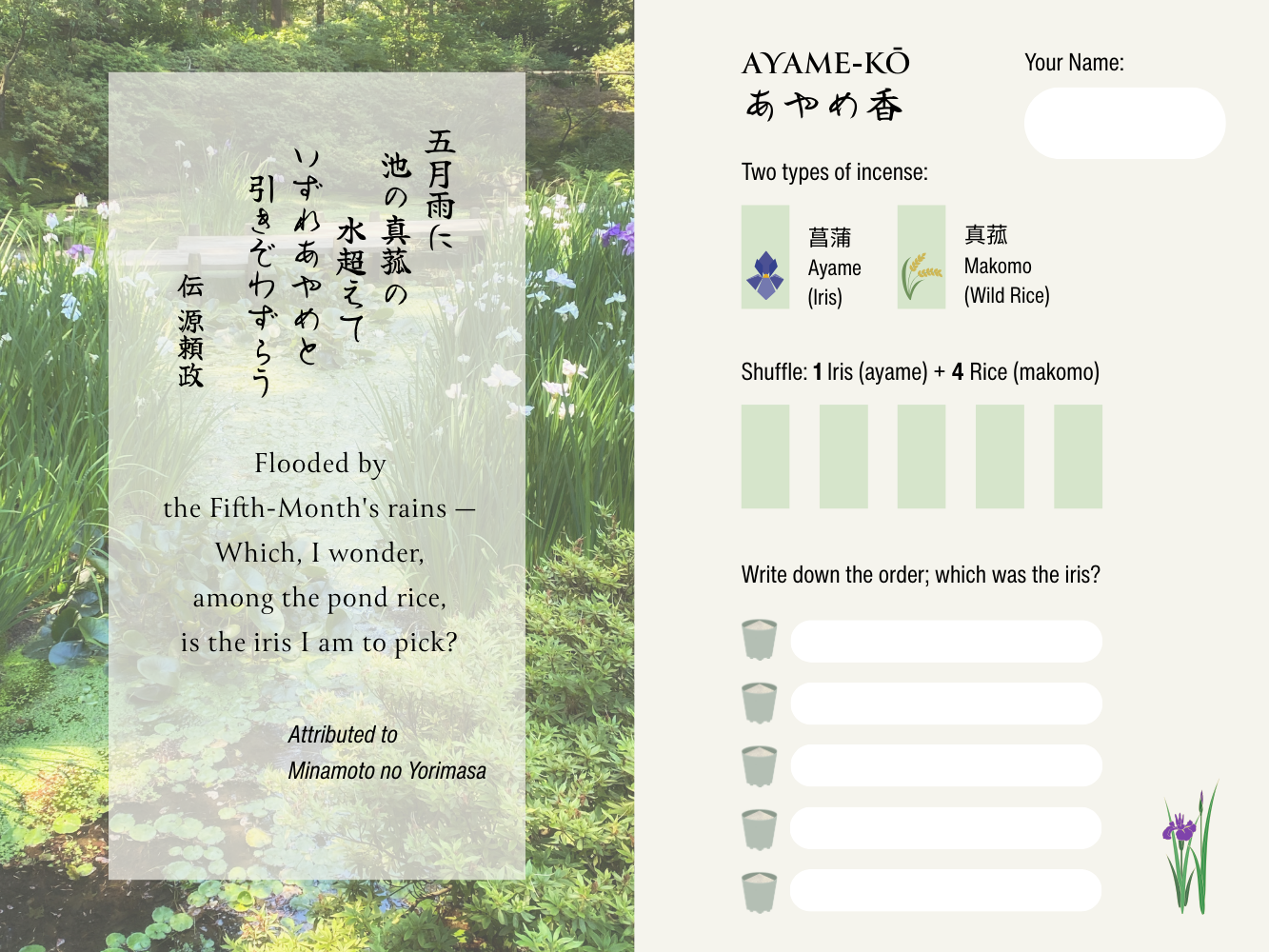
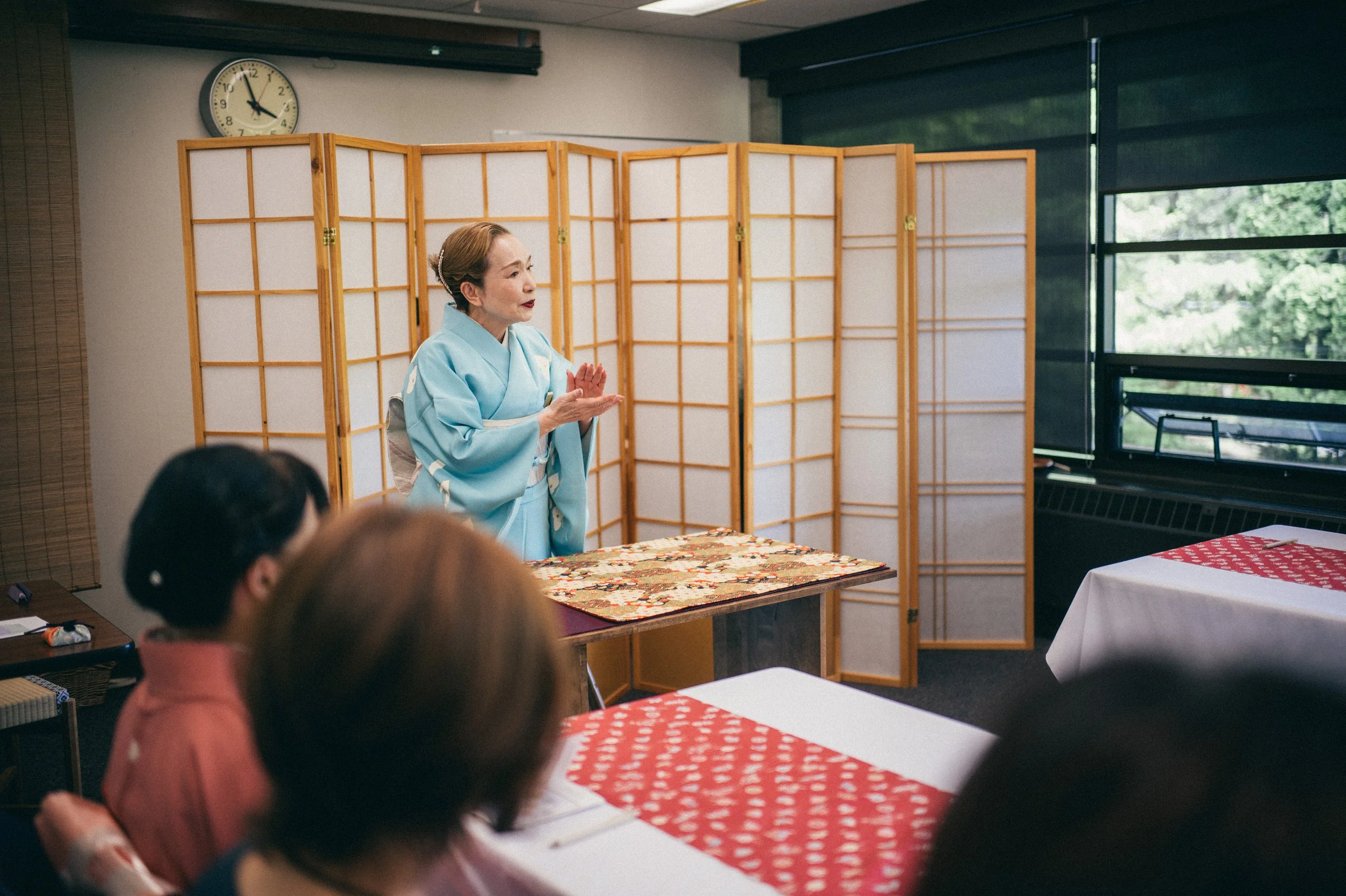
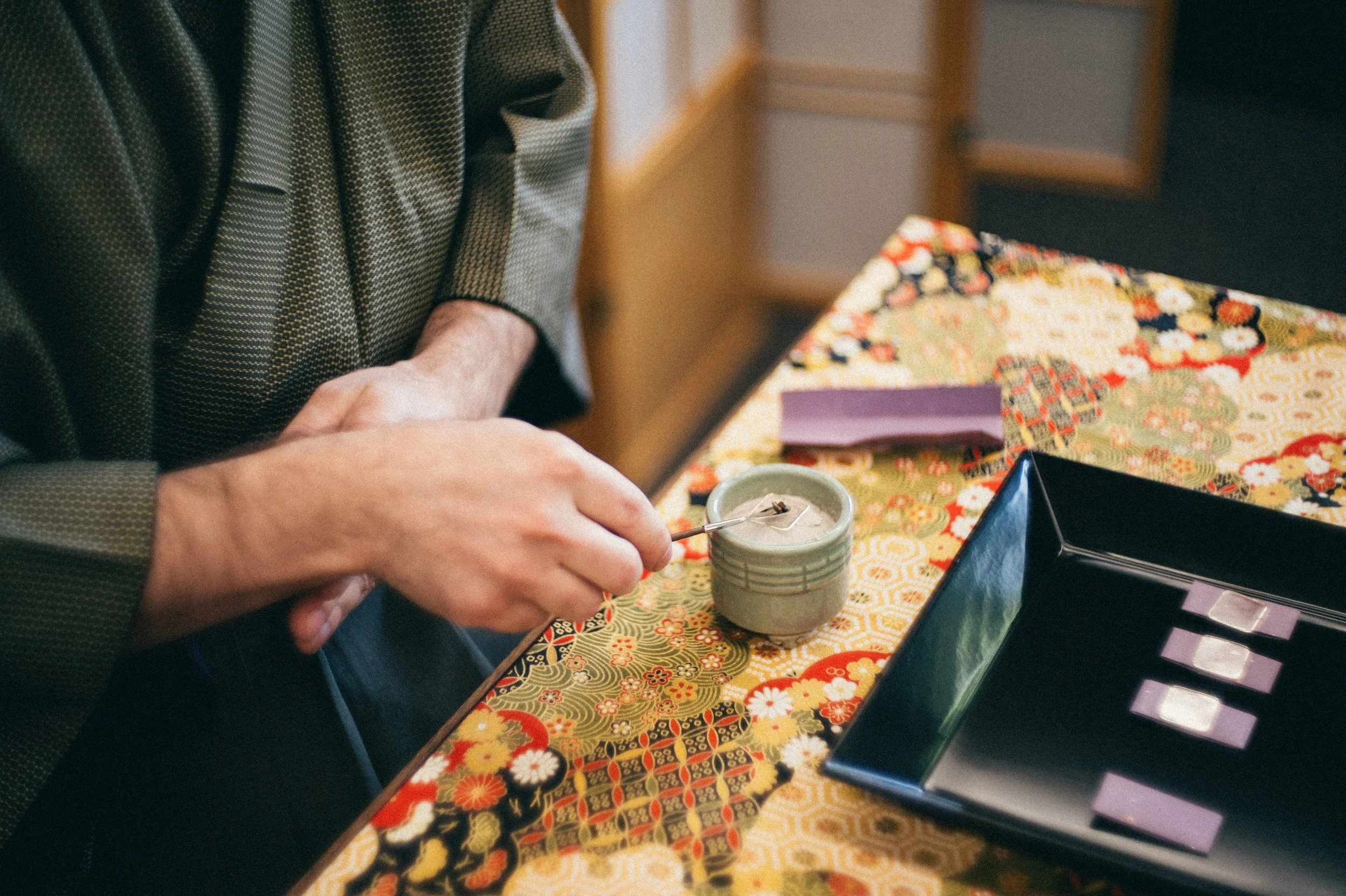
The Asian Centre seminar room was transformed to accommodate a ryūrei 立礼-style incense session, where attendees were seated at long tables and participated in an exercise called Ayame-kō あやめ香 - “The Iris.” They “listened” to five samples of incense, four of which were the same type of wood (designated as makomo, or “wild rice” for the sake of this exercise), and one of which was different (designated as ayame, the “iris”). After the samples were mixed together at random and presented, participants were asked to list the order in which those five samples had been served. Their guesses were submitted and recorded before the correct answer was revealed.
The theme of this kumikō is taken from a poem attributed to the warrior Minamoto no Yorimasa, composed as a clever reply to the emperor’s challenge to identify his beloved Lady Ayame from among a lineup of court beauties:
五月雨 に池の 真菰 の 水越えていずれあやめと引きぞわずらう
samidare ni / ike no makomo no / mizu koete / izure ayame to / hiki zo wazurau
Flooded by / the Fifth Month rains — / Which, I wonder, among the pond rice, / is the iris I am to pick?
Congratulations to those who guessed correctly! But the prize was really being able to enjoy this special selection of aromatic woods, including a Shin-Kyara, “new” Kyara, type wood that was representing Lady Ayame this time.

TEA SESSIONS 茶席
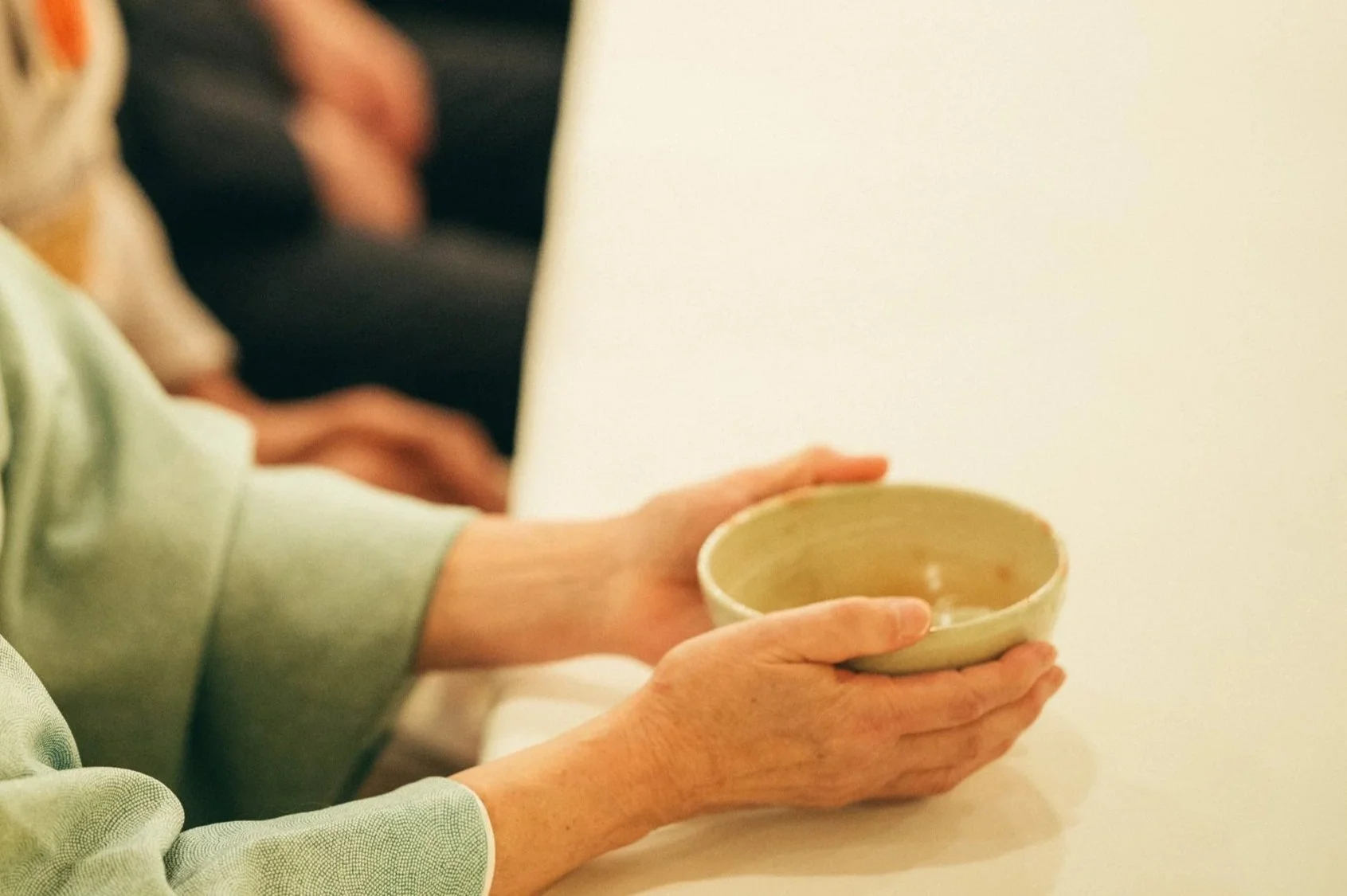
Between incense sessions, guests were invited to enjoy a bowl of our own Dōjin no Tomo matcha together with a special sweet brought from Japan. The sweet, named Ōjuku no kō 黄熟の香 is from Nara and is named for the famed incense wood known as Ranjatai, which is stored in the Shōsōin Imperial Treasury at Tōdaiji temple there. Hints of cinnamon and rarer spices are reminiscent of the rarified scent of this exotic and incomparable National Treasure wood.
We are deeply grateful to the local practitioners of Omotesenke and Urasenke tea traditions who assisted with the tea service.
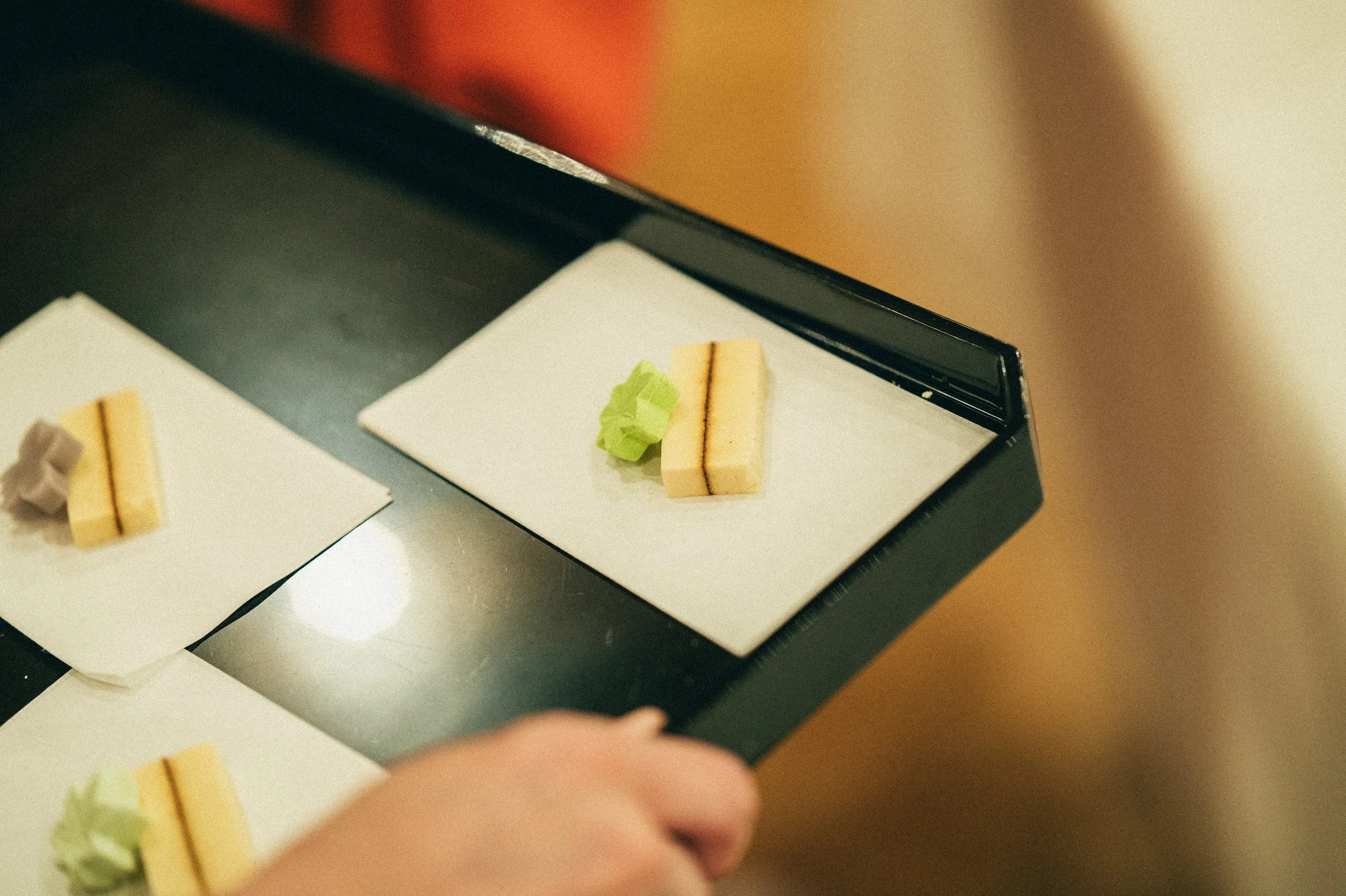
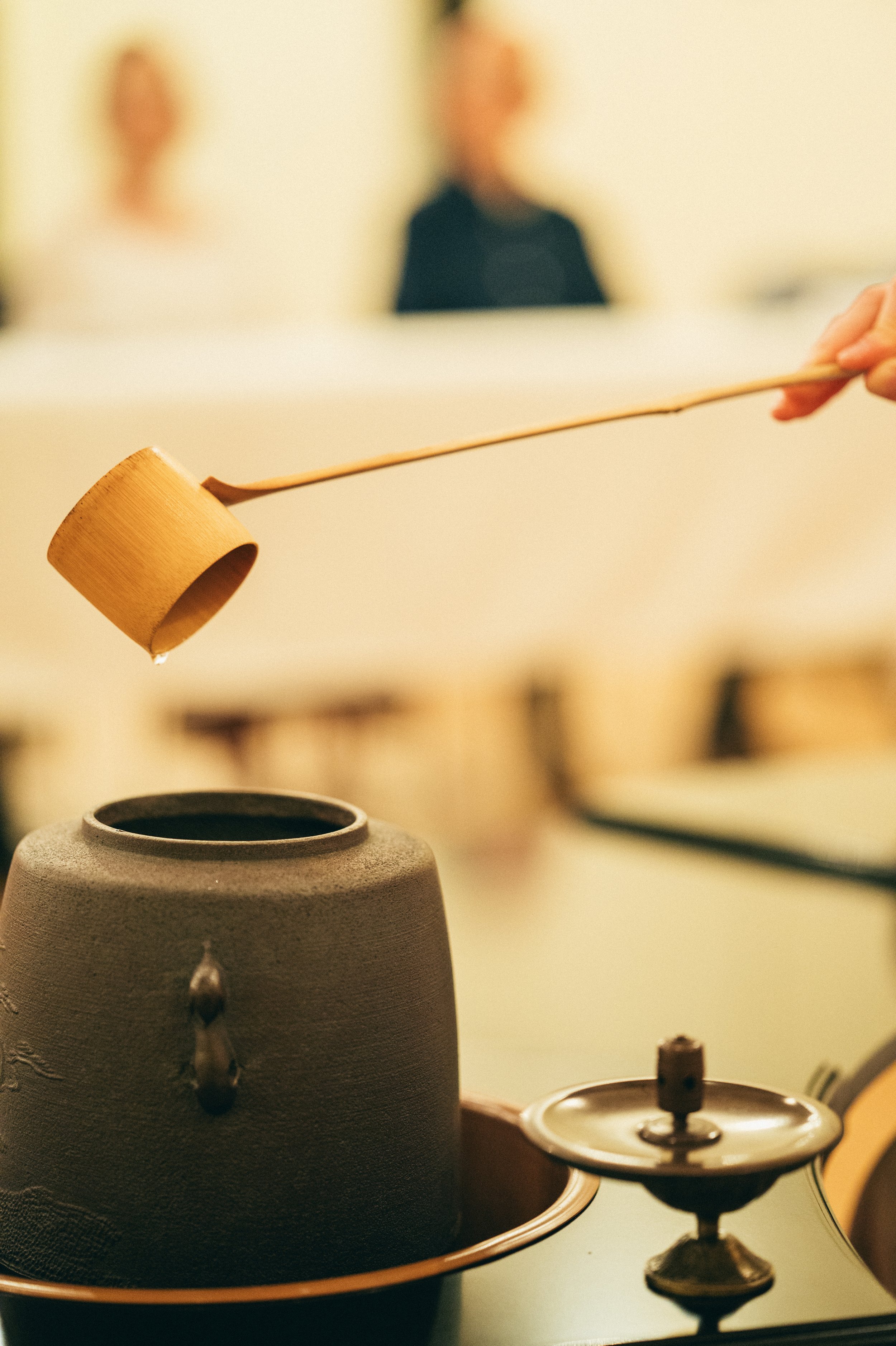
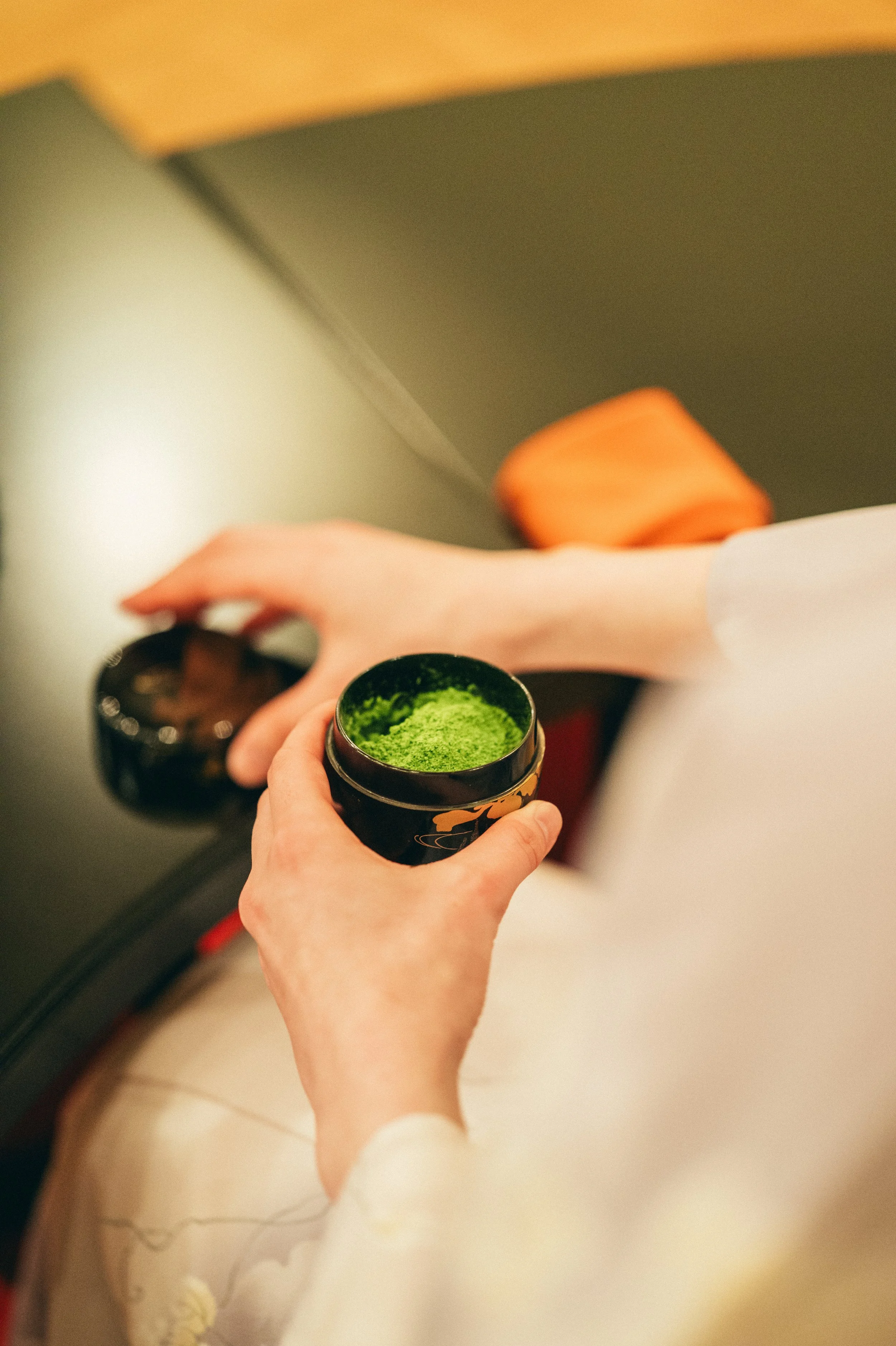
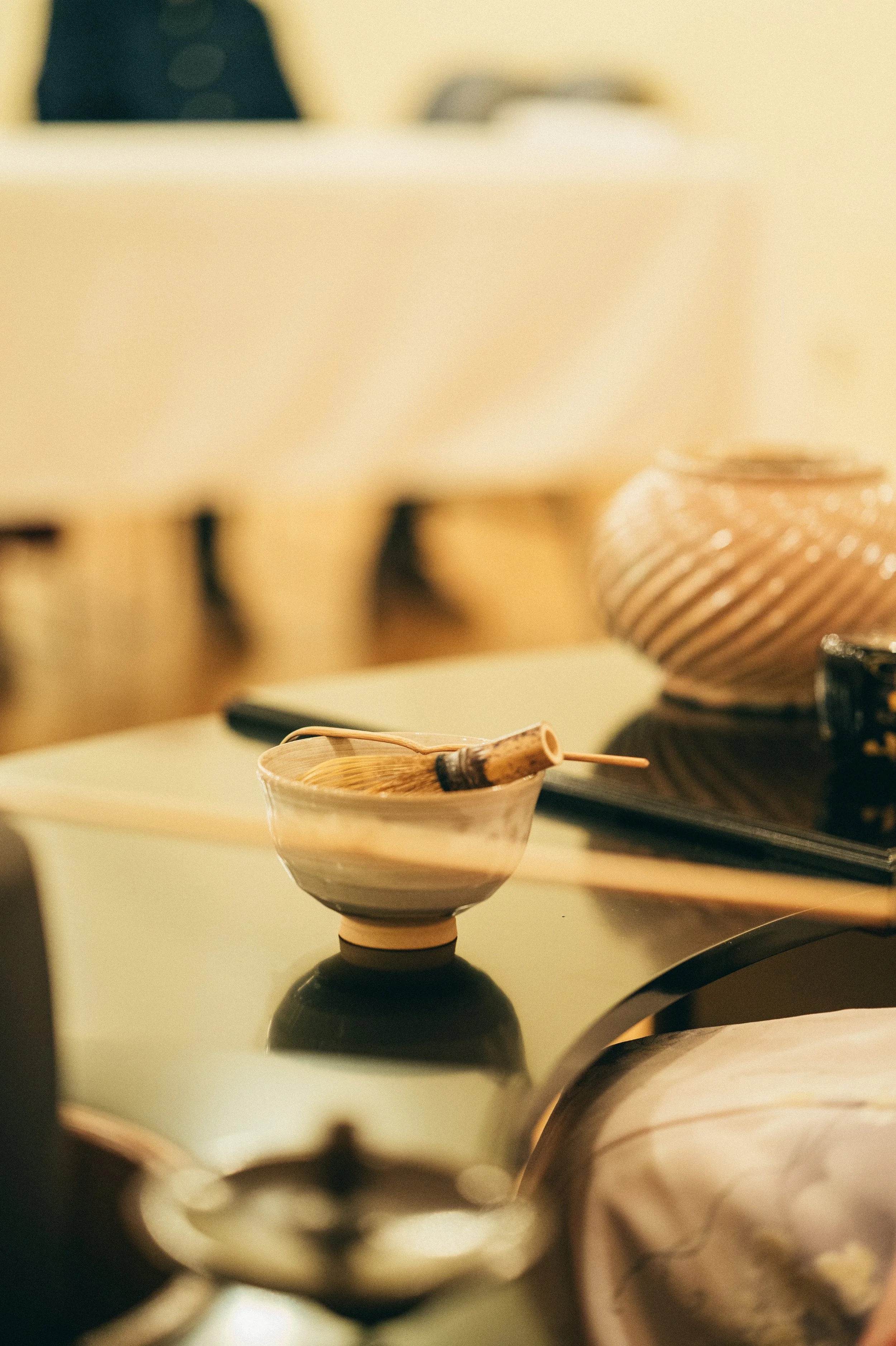
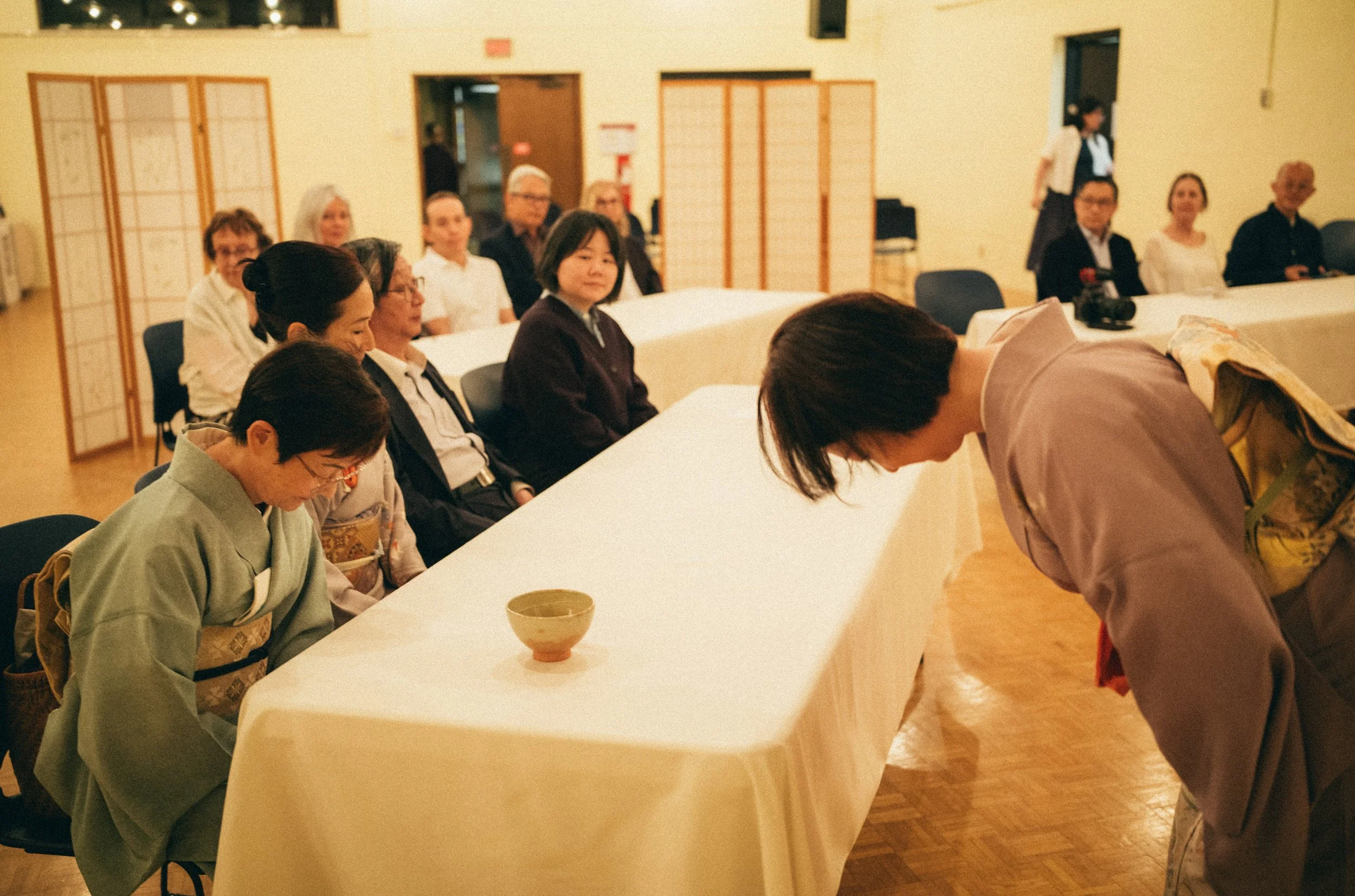
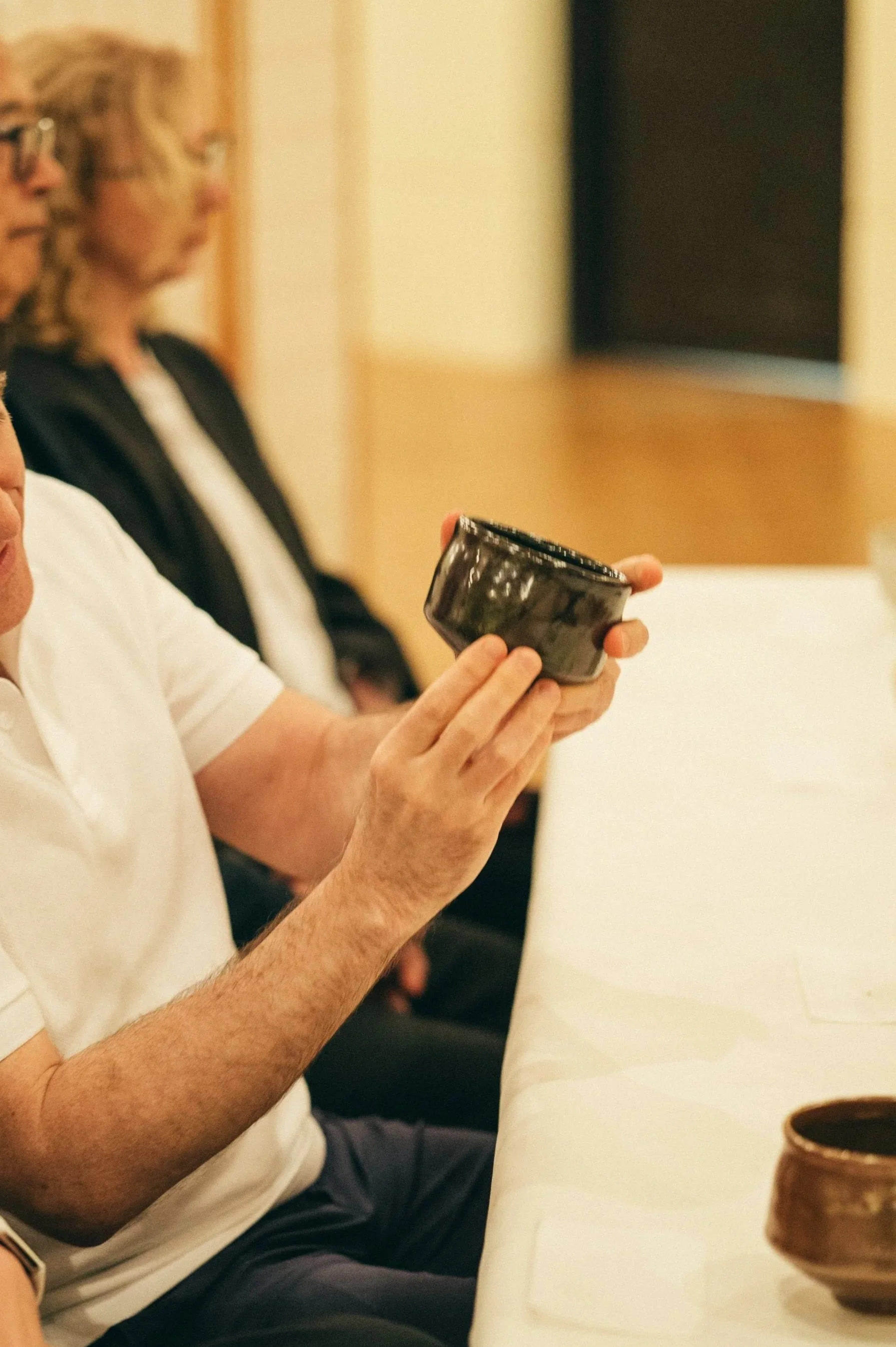
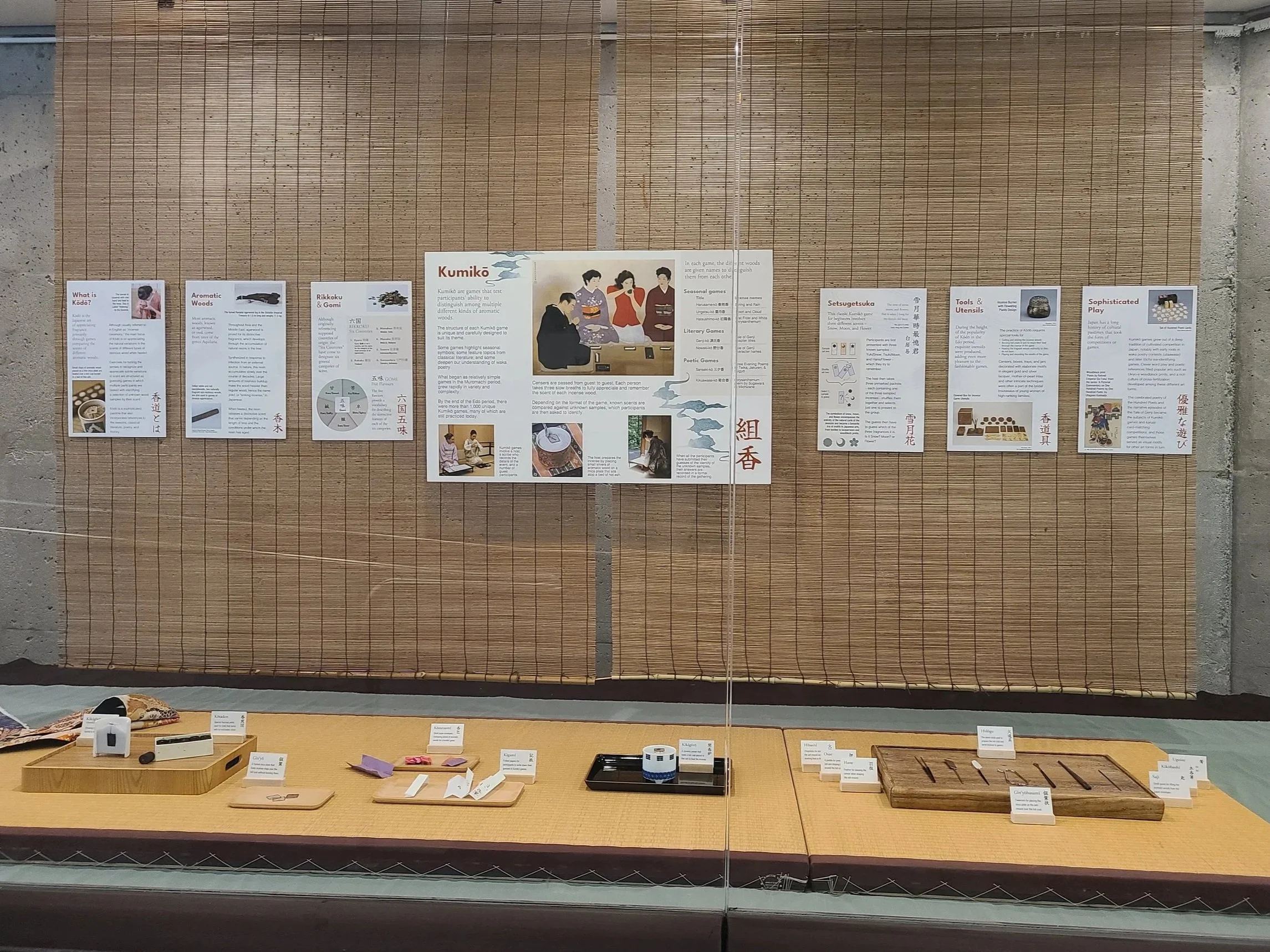
EXHIBIT — KŌDŌ: An Introduction to the Japanese Way of Fragrance
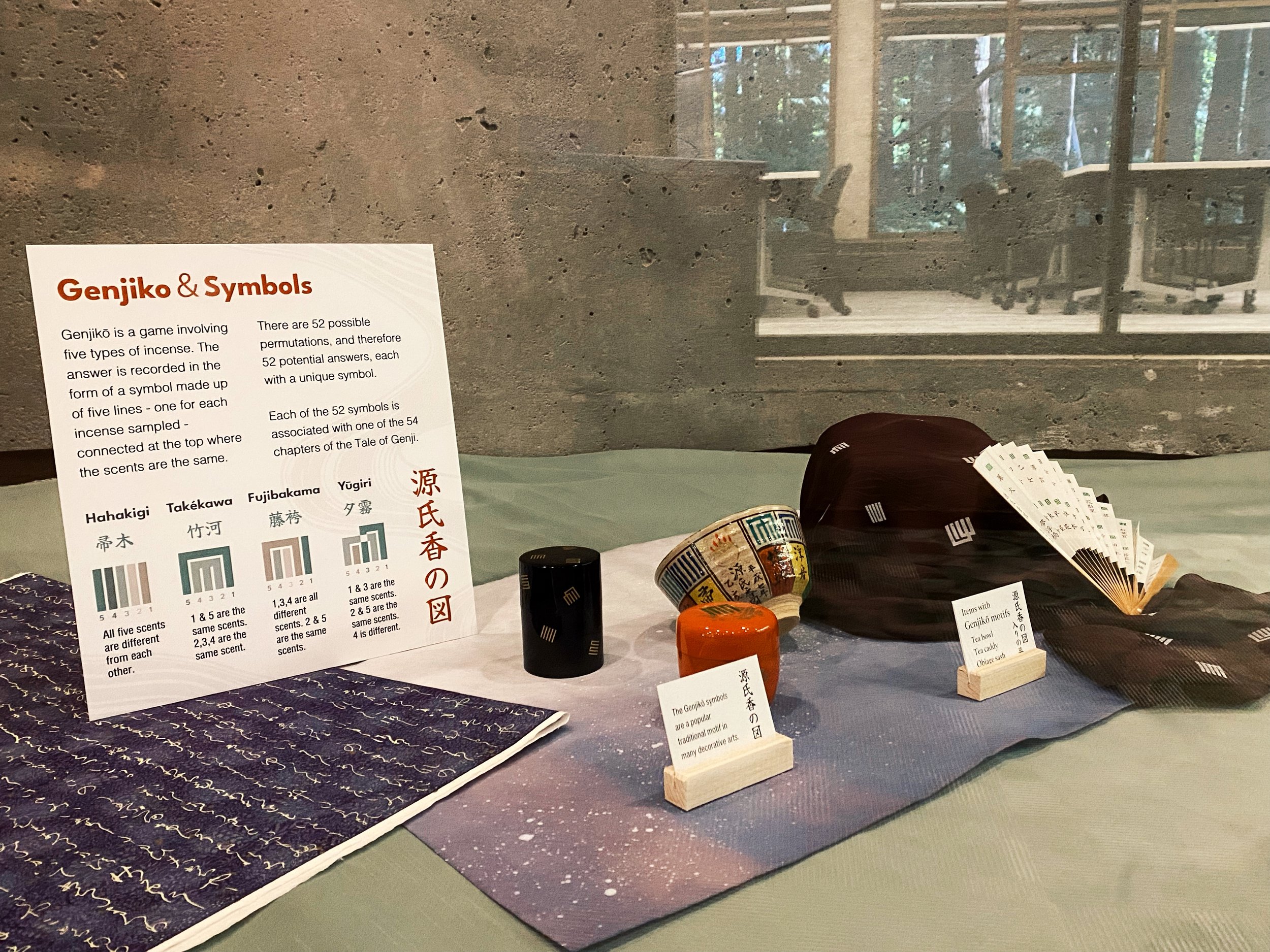
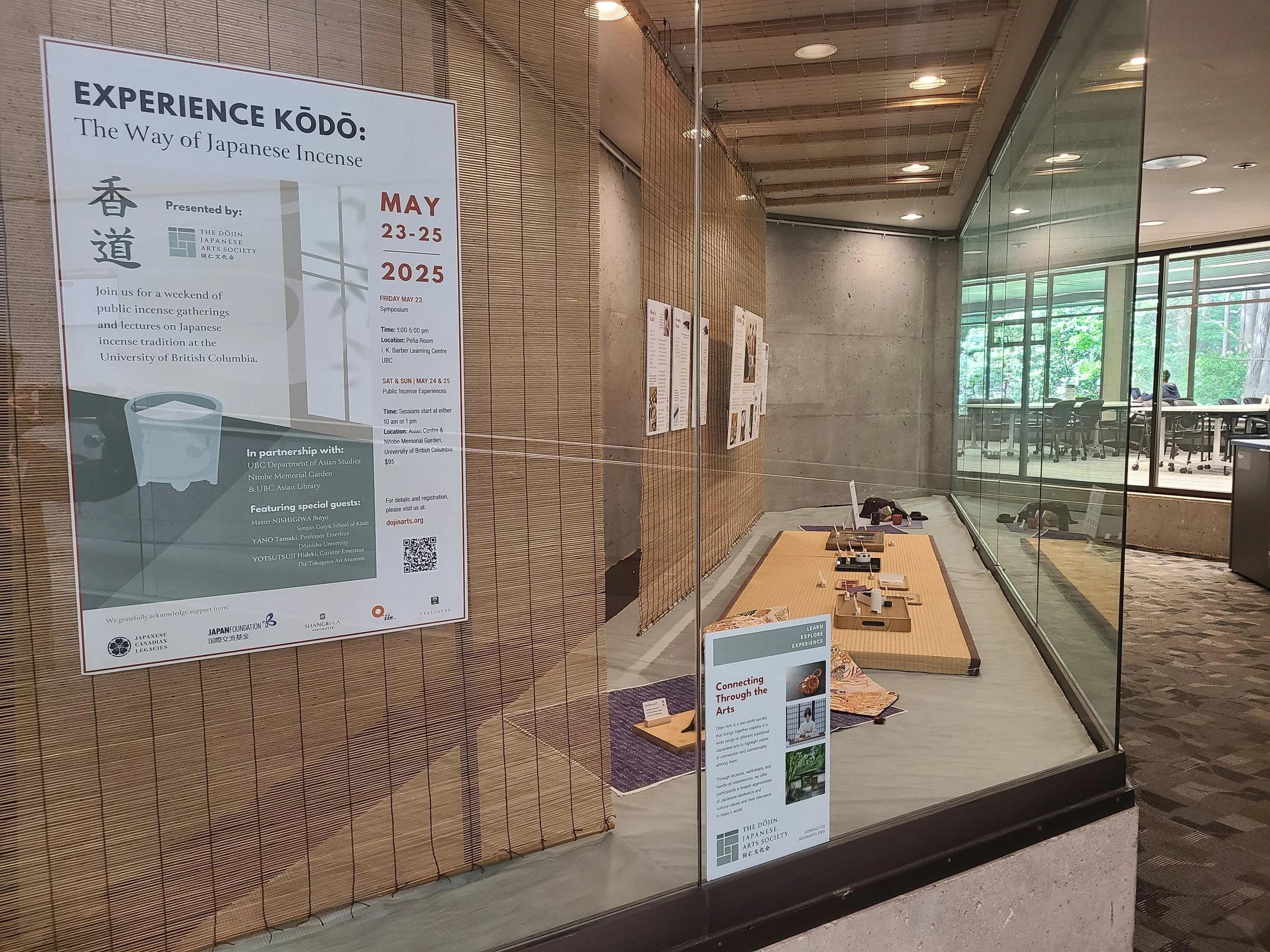
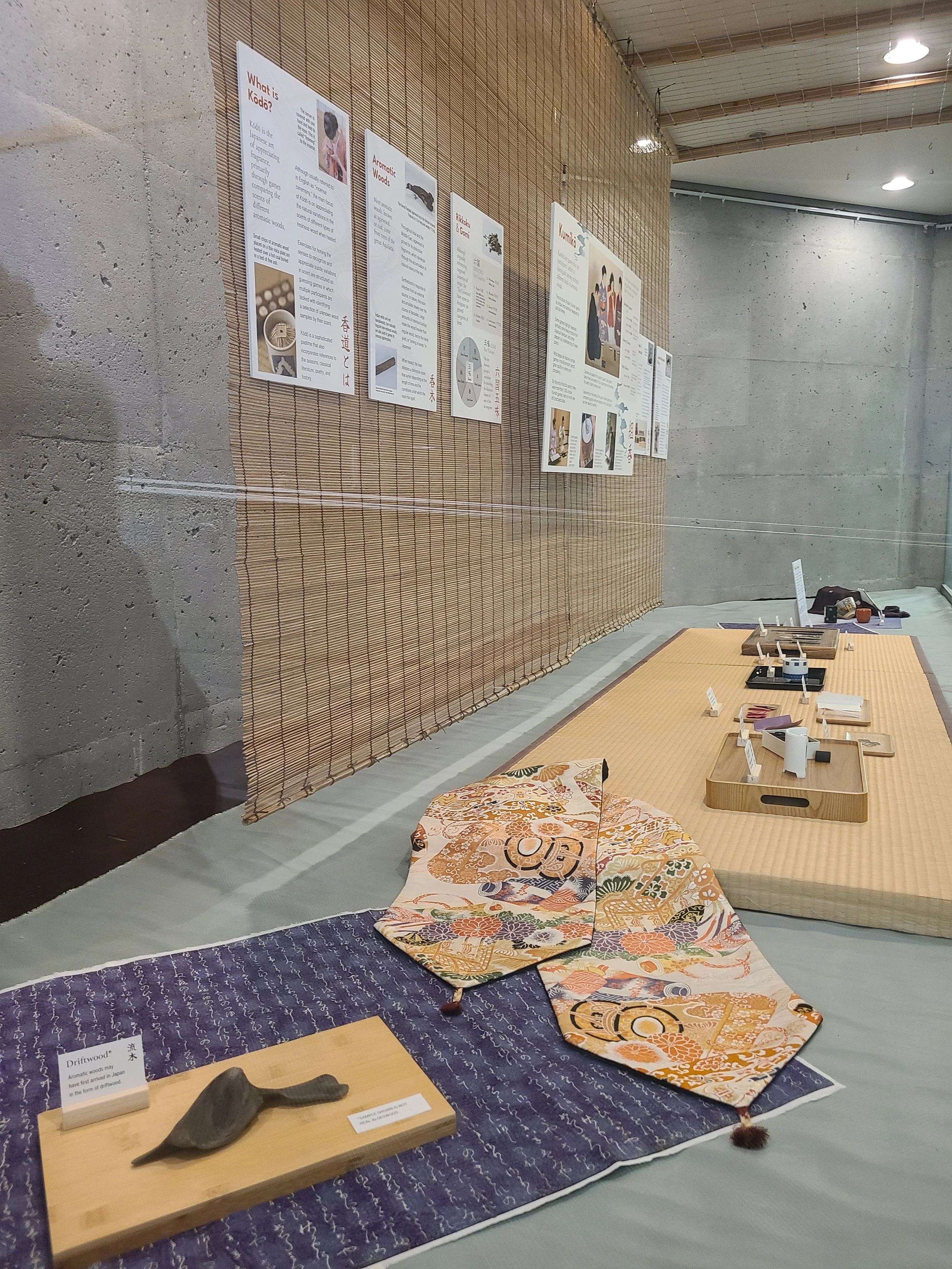
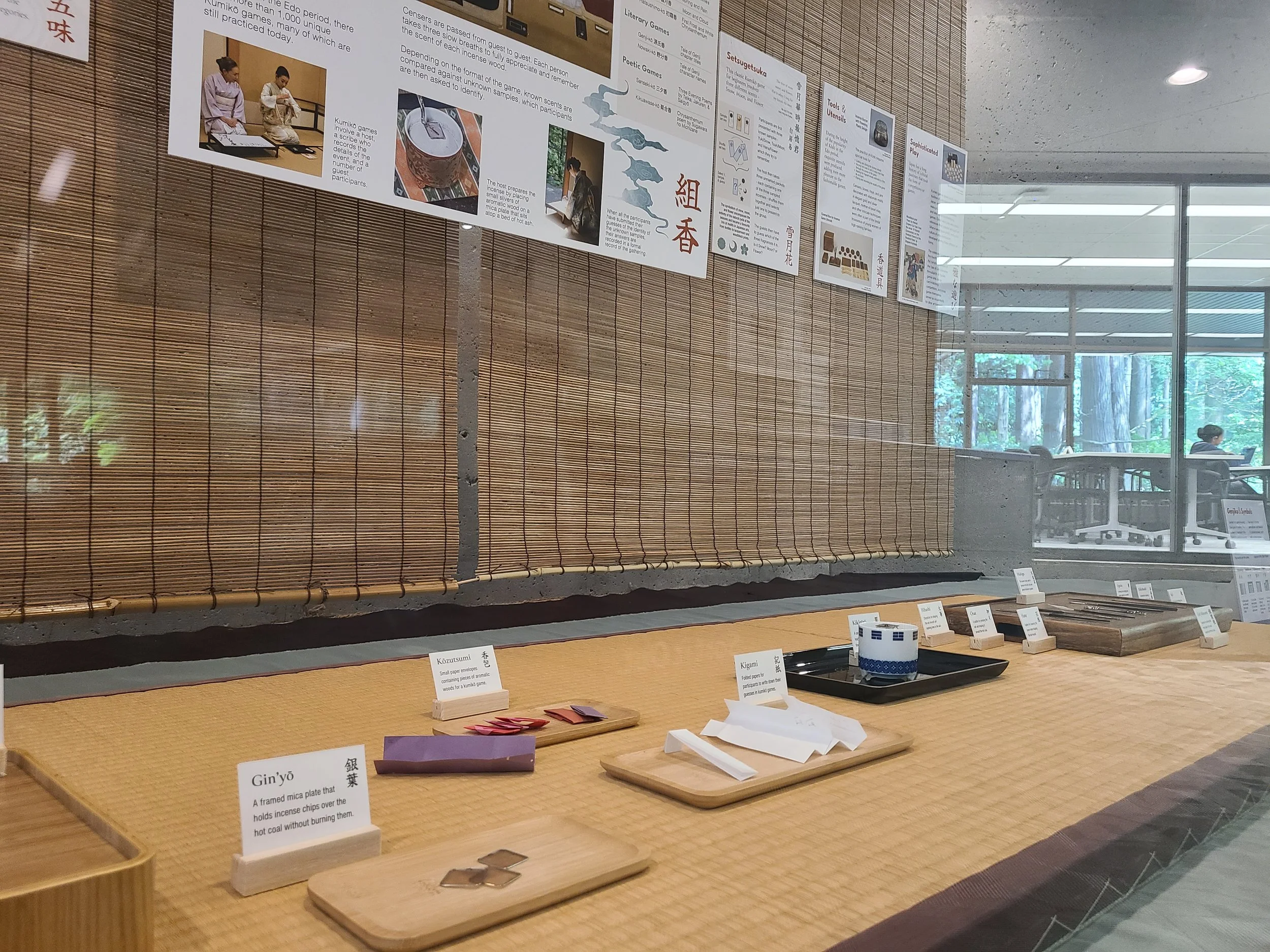
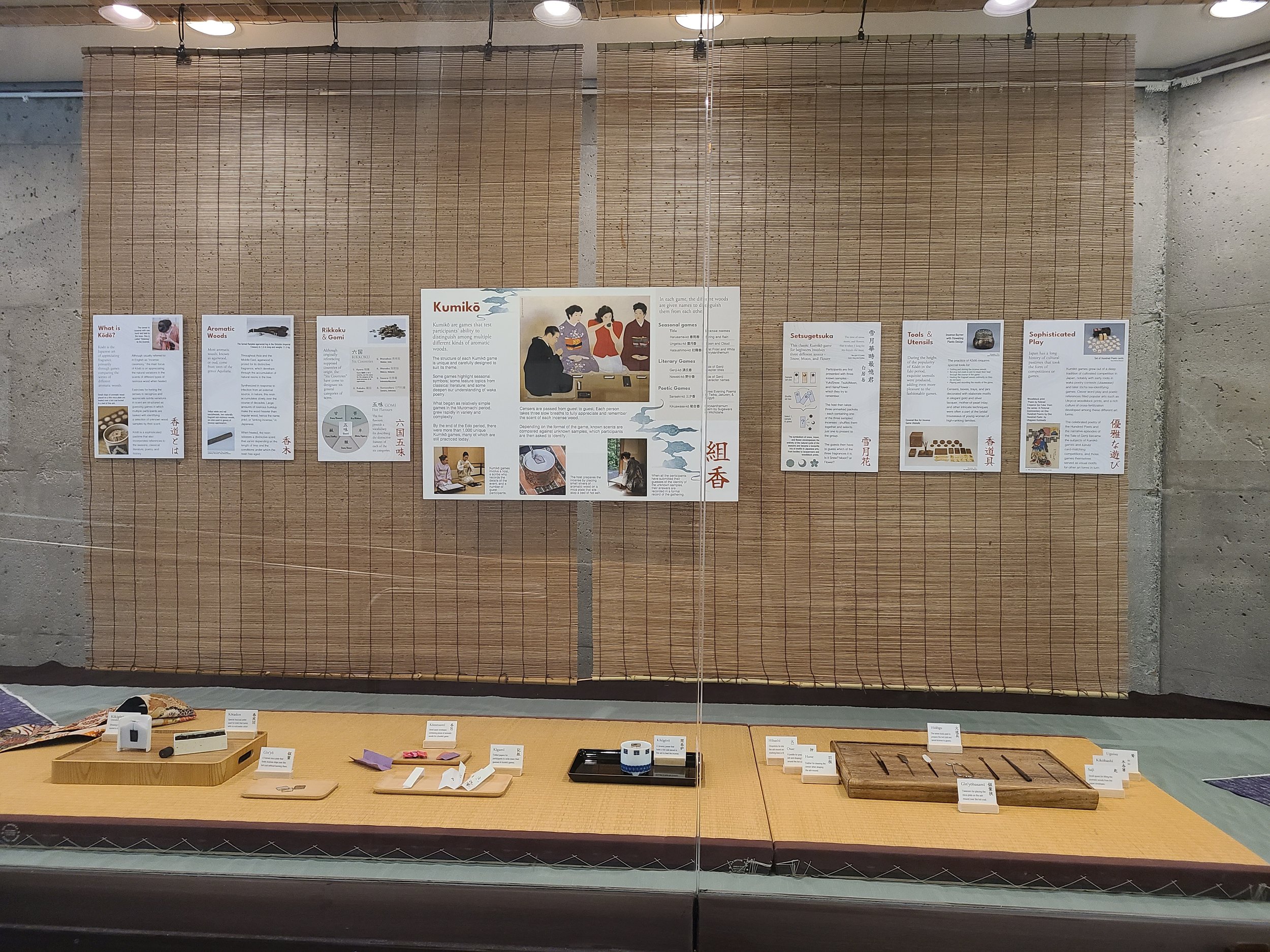
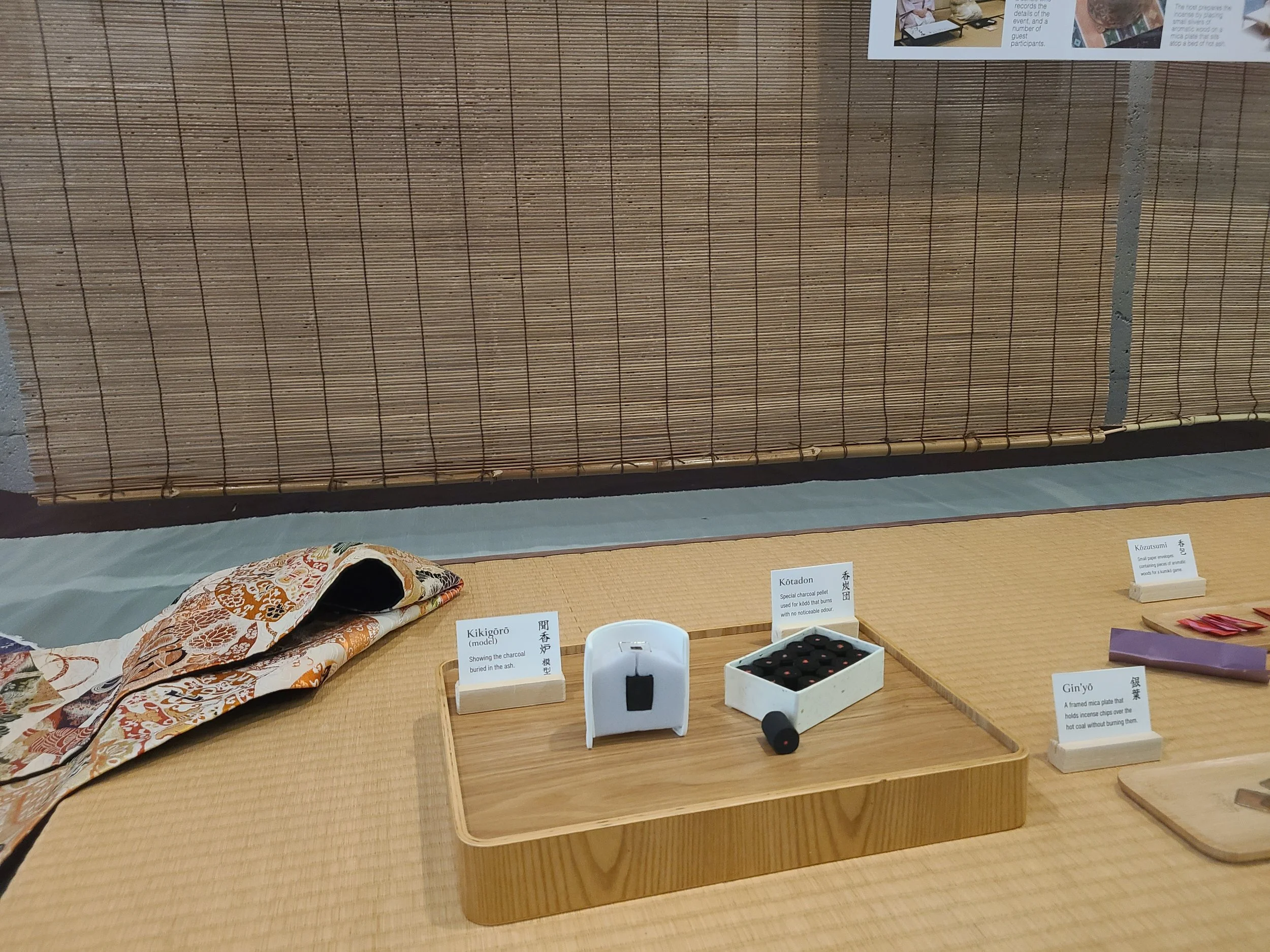
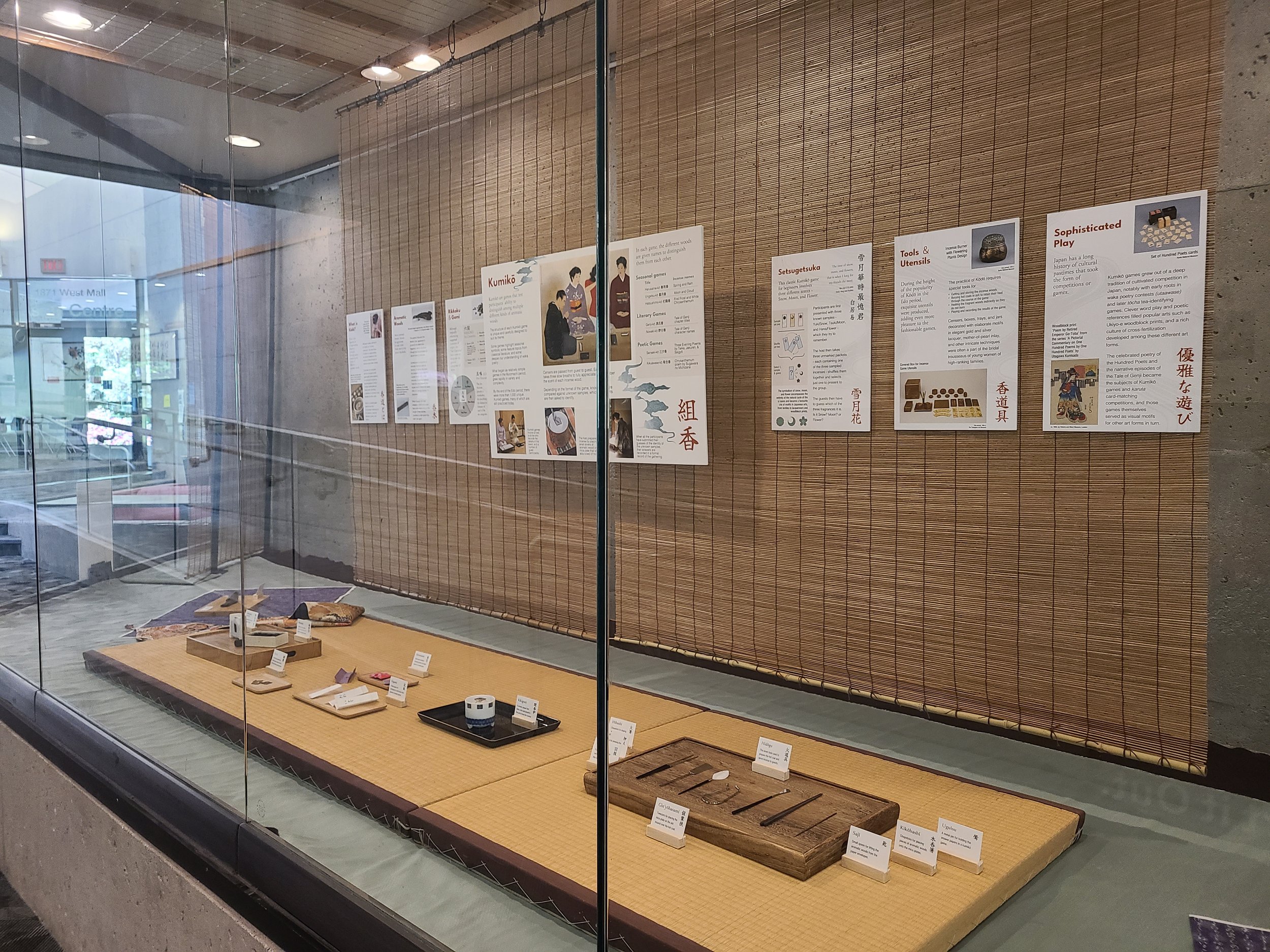
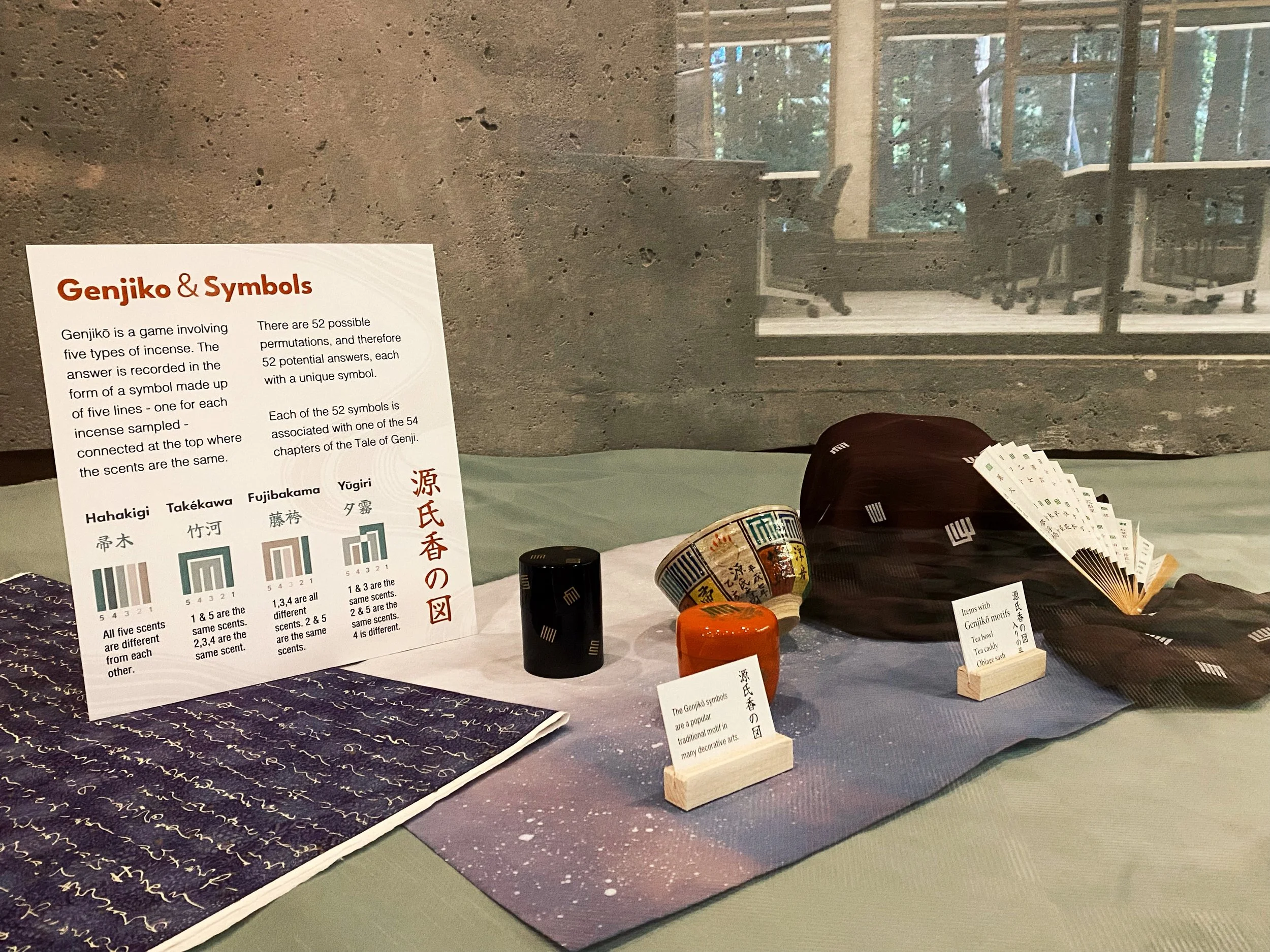
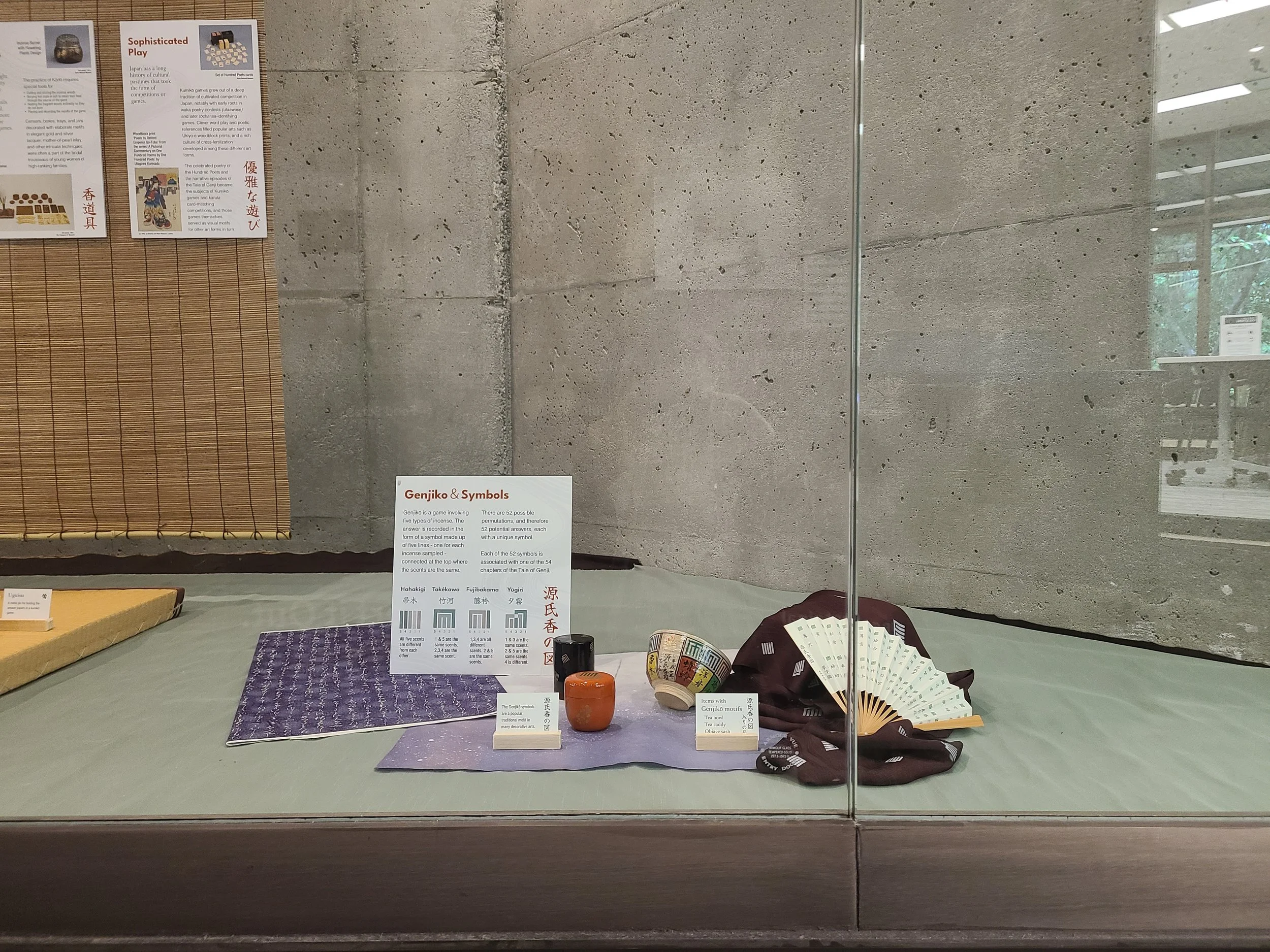
In conjunction with the Experience Kōdō event, Dōjin Arts created an educational exhibit for the display case in the public area of the Asian Centre ground floor. Attendees at the event had time to peruse the exhibit to learn more about the materials, history, and practice of Kōdō, including how hot coals are buried in ash inside the ceramic kōro incense burners to heat aromatic woods for releasing their distinctive scents. Text and image panels covered the topics: What is Kōdō?, Aromatic Woods, Rikkoku & Gomi (The Six Countries and Five Flavours of Kō), the practice of Kumikō, explanation of a sample Kumikō exercise Setsugetsuka (Snow, Moon, and Flower), Tools and Utensils, and Kōdō and the Japanese art of Sophisticated Play.
Presented in conjunction with UBC Library and UBC Asian Library.
Curated by Maiko Behr. Exhibit design by Sen Sakamoto.
In the Media
We are grateful for coverage of this event in local English- and Japanese-language media.
The Source
Vol 25 No 20, p. 3
May 13-27, 2025
— by Amélie Lebrun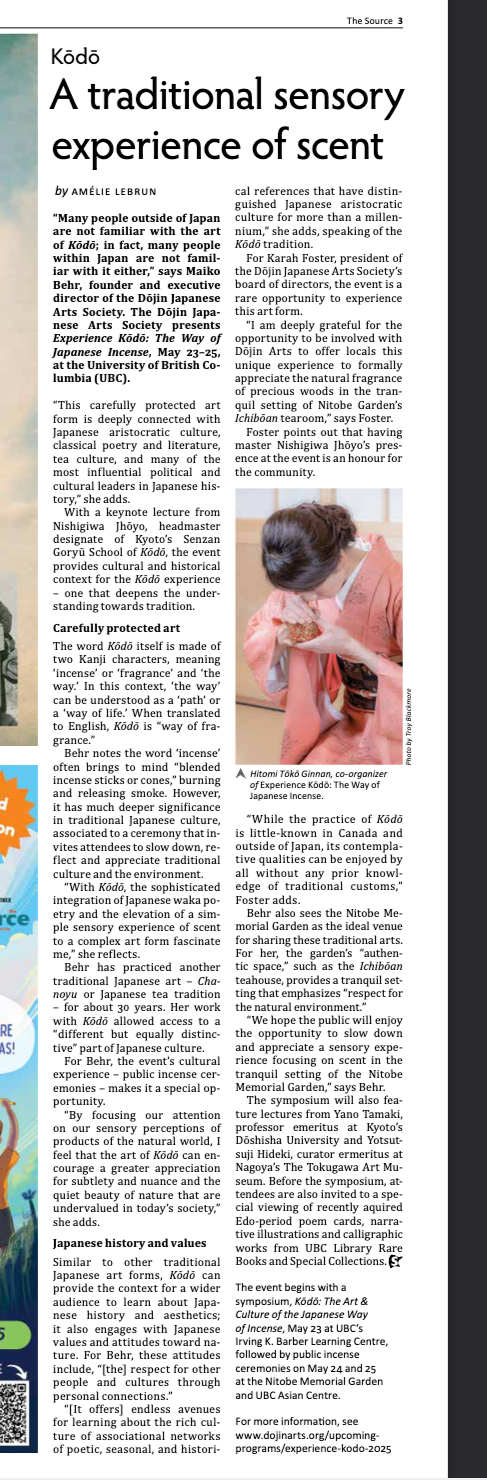
Fraser Monthly 月刊ふれいざー
July 2025, p. 16
— by Mine Bieller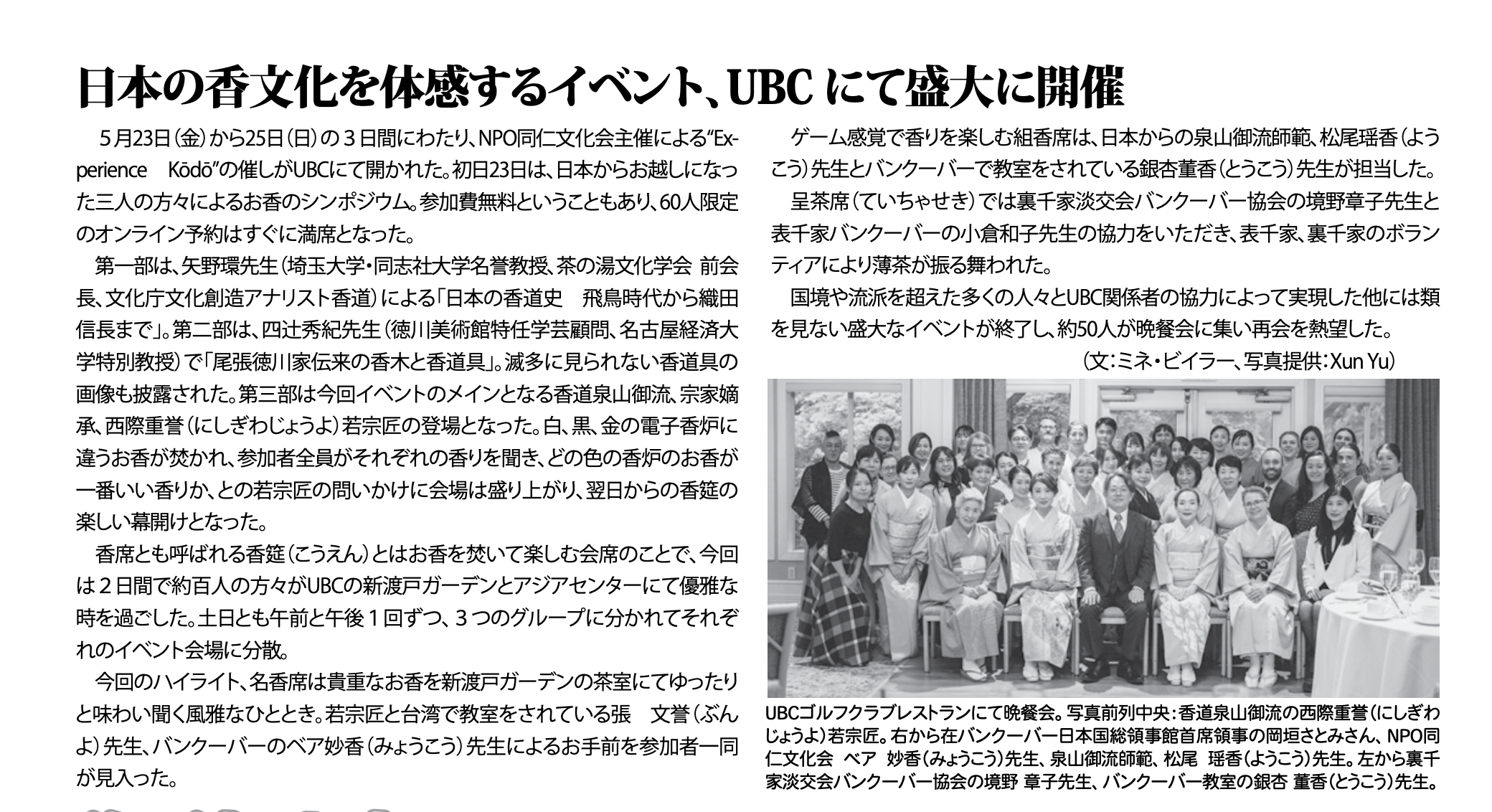
Sincere thanks to our co-presenters:
UBC Library
UBC Department of Asian Studies
Nitobe Memorial Garden

We acknowledge that these programs took place on the traditional, ancestral, and unceded territory
of the xwməθkwəy̓əm (Musqueam) People.
We gratefully acknowledge support from: